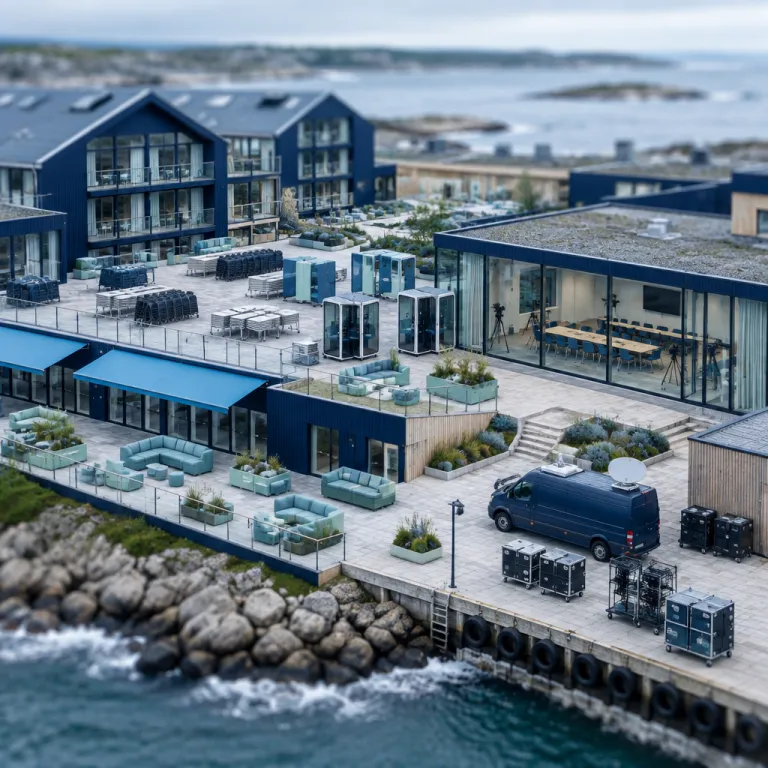
From hotel rooms to hybrid work hubs in the Nordic region
Nordic operators are rethinking every hotel room and lobby as a potential work hub. In Stockholm and Tallinn, the most advanced concepts now treat meeting rooms as flexible coworking studios that can switch from media production to corporate training within minutes. This shift forces asset management teams to reassess Nordic hotel meeting room capacity not only in square metres but also in terms of power, acoustics, and digital infrastructure.
For owners and hotel operators, the classic separation between guest rooms, meeting space, and public areas is fading. A single corridor can now serve hotel rooms in the morning, a pop up coworking venue at midday, and small meetings conferences in the evening, with the same staff and shared management tools. The question is no longer how many conference rooms a Nordic hotel can sell, but how many different revenue scenarios each room can support in one operational day.
Innovation leaders and corporate real estate teams therefore look at Nordic hotel meeting rooms as a portfolio of micro spaces. One compact meeting room might host six people for a podcast recording, then become a quiet room for two remote workers, then a media ready interview set for a corporate guest. When multiplied across all meeting rooms and room suites, this modularity can lift total capacity people served per day far beyond what traditional conference hotels ever planned.
Designing nordic light coworking spaces inside conference hotels
In the Nordic region, light is a strategic design tool rather than a decorative afterthought. A light hotel in Stockholm or a conference hotel in Tallinn will often orient each meeting room to maximise natural light, then layer adjustable LED systems to support video ready coworking and media production. This Nordic light approach directly influences hotel meeting room capacity because it determines how long people can work comfortably in the same room without fatigue.
For HR directors and corporate occupiers, the quality of light in hotel meeting rooms now ranks alongside Wi Fi and acoustics in workplace wellbeing policies. A conference room with glare free daylight, warm evening presets, and controllable blinds can host back to back meetings conferences, hybrid workshops, and content shoots without reducing perceived comfort. By contrast, a poorly lit meeting space may technically host the same number of room people, yet deliver lower engagement and shorter average session durations.
Asset managers studying best practices in maximising conference capacity for hybrid coworking often look at case studies such as the Buttery Hotel, where a dedicated strategy for hybrid ready conference capacity shows how lighting, furniture, and AV integration can multiply use cases. In Nordic hotel properties, similar principles apply when converting guest rooms into ad hoc studios or when carving out semi open coworking zones near the lobby. The more precisely light is managed across hotel rooms and guest rooms, the more flexible the overall meeting and coworking capacity becomes for both corporate and media clients.
Space planning for media coworking in hotel meeting rooms
Effective space planning in media oriented coworking hotels starts with a granular inventory of every room and corridor. Rather than listing only large conference rooms, leading management teams map each meeting room, alcove, and lounge seat as a potential workstation or recording point. This detailed view of Nordic hotel meeting room capacity allows operators to match specific media needs, from quiet single person edits to small forum style debates with an in person audience.
For example, a Nordic hotel near a transport hub in Stockholm might dedicate one floor of guest rooms to flexible work and content creation. Some guest rooms become semi permanent studios, while others convert daily between overnight stays and daytime meeting rooms for four to six people. When these room suites are planned with reinforced sound insulation, blackout options, and movable furniture, they can host both confidential corporate meetings and media interviews without compromising guest comfort.
Designers looking for inspiration often analyse how country house properties manage event capacity, as in the case of Nuthurst Grange meeting and event spaces. The lesson for Nordic conference hotels is clear: treat every meeting space as a kit of parts that can be reassembled for different formats. When Nordic hotel meeting room capacity is expressed not only as maximum capacity people but also as the number of distinct layouts achievable in under fifteen minutes, coworking and media clients gain far more value from the same built area.
From café corners to full scale coworking venues in hotels
Many Nordic hotel operators start their coworking journey in the café or lobby rather than in formal conference rooms. A light hotel with a generous ground floor can gradually transform its public space into a membership based coworking venue, while still serving transient guest traffic. This incremental approach lets management teams test demand, refine service levels, and understand how Nordic hotel meeting room capacity interacts with informal work zones.
One influential example is the way some minimalist hotels have turned their cafés into funded workspaces, as analysed in a poshtel café coworking model. For Nordic hotel brands in Stockholm or Tallinn, the key takeaway is that a well designed café can relieve pressure on meeting rooms by absorbing solo workers and informal meetings. This frees up each meeting room and conference room for higher value bookings such as media shoots, board meetings, or hybrid events.
As coworking demand grows, operators can formalise the café as a coworking space with clear zoning, acoustic treatments, and dedicated power and data points. At that stage, Nordic hotel meeting room capacity becomes part of a broader ecosystem that includes open plan desks, semi enclosed booths, and reservable room suites. The more precisely the café venue is integrated into overall hotel management systems, the easier it becomes to balance guest expectations, corporate bookings, and local community use.
Operational management of nordic meeting capacities for corporate clients
For corporate clients and HR teams, the value of a Nordic meeting offer lies as much in operational clarity as in design. They need to understand exactly how many people each meeting room can host in different layouts, how quickly a conference room can switch from theatre to studio mode, and how guest rooms can be repurposed for confidential work. This is where a precise definition of Nordic hotel meeting room capacity becomes a strategic sales tool rather than a static technical sheet.
Leading conference hotels in Stockholm and Tallinn now publish detailed capacity people charts that include both traditional formats and coworking scenarios. A single room might be listed as 10 people in boardroom style, 6 people in media recording mode, and 4 people in extended focus work configuration. When these figures are integrated into digital booking engines, corporate clients can send a request or even send multiple requests for complex meetings conferences without lengthy email exchanges.
For operators, the challenge is to align this commercial transparency with back of house management. Staff must know exactly how long it takes to flip a meeting space, how many technicians are needed for a Nordic meeting with live streaming, and how guest rooms or room suites can be held back for last minute upgrades. When Nordic hotel meeting room capacity is managed as a living dataset rather than a static brochure, conference hotel teams can respond faster to every request while protecting both revenue and guest satisfaction.
Digital journeys, booking forums, and request management for hotel coworking
As media coworking grows inside hotels, the digital journey from first search to confirmed booking becomes critical. Corporate buyers expect to browse Nordic hotel offers, compare meeting rooms, and understand hotel meeting room capacity without downloading complex PDFs. They also look for simple ways to send a request, adjust capacity people, and receive rapid confirmation for both single events and recurring meetings.
Some Nordic hotel groups now integrate interactive booking tools that function almost like an internal forum for planners and hotel teams. A client can specify the number of room people, preferred meeting space layout, and technical needs, then send a request that triggers automated workflows for sales and operations. When combined with clear descriptions of guest rooms, hotel rooms, and room suites, this approach reduces friction and makes conference hotels more attractive for agile corporate teams.
For innovation leaders and corporate real estate directors, the next step is to connect these booking tools with real time space management systems. That means knowing at any moment which conference rooms are free, which meeting room is set for a Nordic meeting with streaming, and how many guest rooms remain available for late arrivals. When digital and physical layers align, Nordic hotel meeting room capacity becomes a dynamic asset that can flex with demand from local people, international guests, and media production crews.
Key figures on hotel coworking and meeting capacity
- According to JLL’s “Global Flexible Space Report 2023” (industry report, figures indicative), flexible workspace in hotels has grown to represent an estimated 2 to 3 % of total urban coworking supply in major European capitals, with Nordic cities such as Stockholm showing some of the fastest adoption rates.
- Data from STR’s “Hotel Performance and Meeting Space Benchmarking 2022” (benchmarking study, figures indicative) indicates that hotels with more than 500 m² of meeting space typically achieve 10 to 20 % higher average daily rates than comparable properties without significant conference rooms, underlining the revenue impact of well planned meeting capacity.
- Research by CBRE in its “EMEA Occupier Survey 2022: The Future of the Office” (survey summary, directional data) shows that hybrid work policies can reduce corporate office footprints by 20 to 30 %, which in turn increases demand for high quality hotel meeting rooms and guest rooms that can support project based teams.
- A survey by the Global Business Travel Association, “GBTA Business Travel Index Outlook 2023” (industry outlook, figures indicative), reports that more than half of corporate travel managers now prioritise hotels with strong meeting and technology infrastructure, including reliable Wi Fi, hybrid meeting capabilities, and flexible conference room layouts.
FAQ about Nordic hotel coworking and meeting room capacity
How should a hotel calculate coworking friendly meeting room capacity ?
A hotel should calculate coworking friendly capacity by combining traditional fire safety limits with ergonomic and technological criteria. That means considering not only how many people fit in a meeting room, but also how many power outlets, screens, and microphones are available for simultaneous use. Operators should define several capacity scenarios per room, such as workshop, hybrid meeting, and media recording modes.
Can guest rooms realistically be used as coworking or media spaces ?
Guest rooms can be used as coworking or media spaces when they are carefully selected and adapted. Hotels often choose rooms with minimal noise transfer, good natural light, and easy access to lifts for equipment. With movable furniture, extra power points, and clear housekeeping protocols, these hotel rooms can host confidential calls, interviews, or editing sessions during the day.
What are the main design priorities for media ready meeting rooms in Nordic hotels ?
The main design priorities include acoustic control, flexible lighting, and robust connectivity. Nordic hotels typically focus on natural light combined with dimmable LEDs, neutral wall colours, and discreet acoustic panels that support both speech clarity and recording quality. Sufficient ceiling height, cable management, and storage for mobile equipment are also essential for fast room reconfiguration.
How can corporate clients evaluate Nordic hotel meeting room capacity for hybrid events ?
Corporate clients should request detailed capacity charts that include both in room attendance and recommended online participant numbers. They should also ask about camera positions, microphone coverage, and dedicated technician support for hybrid meetings. Site visits or virtual tours can help verify that conference rooms and meeting spaces match the technical and comfort standards required for long sessions.
What role does digital booking play in managing hotel coworking spaces ?
Digital booking tools are central to managing coworking spaces and meeting rooms efficiently. They allow clients to see real time availability, configure layouts, and send a request with precise technical needs. For hotels, these systems synchronise sales, operations, and housekeeping, ensuring that every room is prepared correctly for each use case.
Case study: Nordic conference floor turned hybrid work hub
One Stockholm conference hotel reportedly converted a 600 m² meeting floor into a hybrid work hub with six meeting rooms and two media studios. Standard rooms of 35 m² now flip from classroom (18 people) to studio mode (6 people on camera) in under 12 minutes, supported by pre cabled lighting and mobile backdrops. Within the first year, the property recorded a 17 % increase in meeting related revenue and a 25 % rise in repeat corporate bookings, with these figures shared as an illustrative example of how hybrid events and media ready sessions can reshape performance.