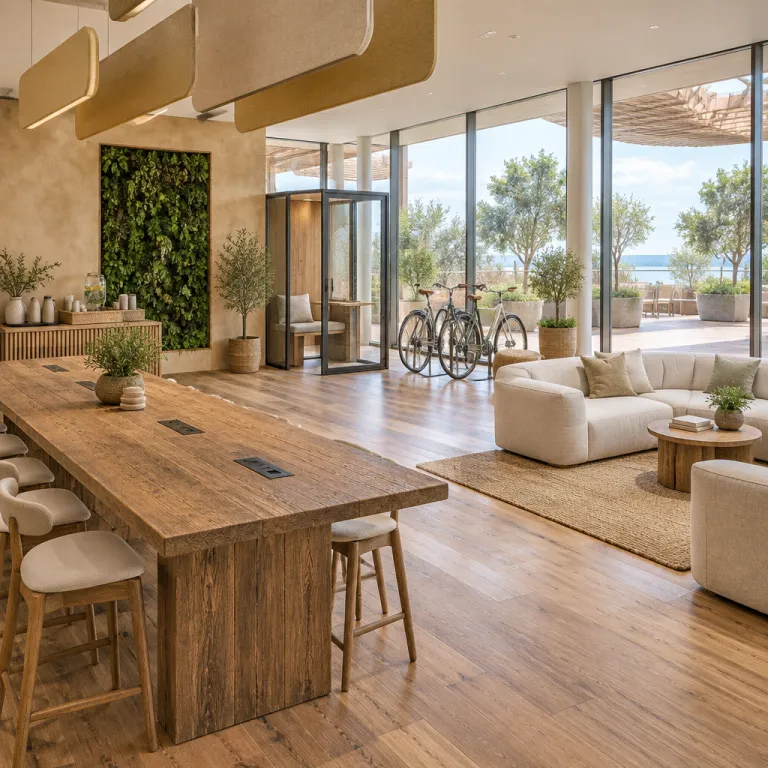
From idle lobby to sustainable tourism hotel workspaces
World Tourism Day lands on your calendar as a mirror, not a marketing slot. For hotel owners and asset directors, it is a sharp reminder that the tourism industry is now judged on how every square metre of hospitality real estate performs against sustainable tourism and sustainable hospitality expectations. The hybrid hospitality lobby that doubles as working spaces is suddenly part of the ESG conversation, not just a design flourish.
The honest sustainability case for hotel coworking spaces starts with what you already own. You have a hotel lobby, lounges and sometimes hotels resorts public areas that are heated, cooled and lit for community comfort, even when tourism or business travel guests are not using them during the day. Turning these underused zones into sustainable tourism hotel workspaces means you sweat existing assets instead of adding a new type of office building to the market, which aligns with responsible tourism narratives in north America, europe, africa and beyond.
This is not about a green sticker on a laptop table. It is about using hybrid hospitality to reduce the long term carbon footprint of the tourism industry by avoiding new construction, while still serving the growth of remote work and flexible business travel demand. When a hotel in the united states or in east africa can share its lobby as eco friendly working spaces for the local community, it supports community engagement and community driven economic activity without expanding the built footprint of hotels or separate offices.
The limits of the green lobby narrative
There is a caveat that every VP of hospitality or real estate should confront before celebrating eco friendly coworking spaces. A lobby that runs as working spaces from 8:00 to 20:00 for remote work users has a measurable energy cost, and sustainable hospitality claims must include that extra load in any forecast of environmental impact. The same applies to hotels resorts that extend bar hours or open an eco lodge style lounge for day guests from the local community or from tourism flows.
Energy for lighting, cooling, ventilation and devices in these sustainable tourism hotel workspaces must be tracked with the same discipline you apply to guest rooms. If your hotel in north america or europe adds twenty coworking seats and a podcast booth, you need data on how that affects the property’s carbon footprint and whether it still supports responsible tourism goals. Only then can you credibly say that hybrid hospitality is more sustainable than a separate office type of building in the same market or in a nearby business district.
The media narrative around hotel coworking in paris, london or any global tourism hub often focuses on design and community, not on kilowatt hours. Yet for asset managers and innovation leaders, the real story is whether these sustainable tourism hotel workspaces reduce total energy per user compared with commuting to a distant HQ. That is why any serious analysis of média coworking dans les hôtels should sit next to hard ESG underwriting, such as the frameworks discussed in specialised briefings on ESG in the hybrid lobby underwriting memo, rather than next to lifestyle features about lobby art.
Local tourism, shorter commutes and the hybrid hospitality dividend
Hybrid hospitality is reshaping how cities talk about tourism and business travel at the same time. When hotels open their lobbies as working spaces for local professionals, they reduce the need for long commutes to central offices and support more sustainable tourism patterns for visitors who extend stays for remote work. A guest who spends three extra days in a hotel to work from a quiet corner of the lobby may generate more tourism spend with a smaller carbon footprint than three separate short trips by air.
This is where sustainable tourism hotel workspaces intersect with city level responsible tourism strategies. Municipalities in europe, north america and latin america are starting to promote low impact tourism that blends leisure, business and remote work in a single stay, often close to a national park, waterfront or cultural district. Hotels that share their lobbies as eco friendly coworking spaces can position themselves as part of a community driven ecosystem, especially when they link day passes to local conservation efforts or to community engagement programmes.
For hotel groups, the growth opportunity is not just incremental revenue from day users. It is the chance to reposition the hotel as a flexible node in a global network of sustainable working spaces that serve both tourism and local business communities. Case studies on how média coworking dans les hôtels is redefining the business stay in paris already show that when the lobby table, the outlet and the espresso align, guests stay longer, travel less often and integrate more easily into the surrounding community.
What a credible sustainability claim for work lobbies must prove
Marketing teams will be tempted to label every laptop friendly lobby as green or eco friendly this World Tourism Day. Serious operators know that sustainable tourism hotel workspaces need evidence, not adjectives, especially when investors and regulators scrutinise ESG claims across the hospitality market. The KPI that separates a real claim from a slogan is simple to state and hard to measure : energy and carbon footprint per user hour, compared with realistic alternatives.
To build that KPI, you need a baseline for how your hotel lobby performed before coworking spaces and remote work users arrived. Then you model scenarios : a guest working from a hotel in the united states versus commuting to a suburban office in north america, or a digital nomad using an eco lodge lounge in east africa instead of flying back and forth between continents. Over time, you can forecast how hybrid hospitality and sustainable hospitality design choices, such as natural light, efficient HVAC and shared amenities, change the long term environmental profile of your hotels and hotels resorts portfolio.
Asset managers should treat these sustainable tourism hotel workspaces like any other real estate product. That means clear segmentation by type of user, transparent pricing that reflects energy costs, and community engagement metrics that track how much of the space is used by local community members versus transient tourism flows. Strategic reports on how the summer bleisure window converts peak season room demand into all day workspace bookings already hint at this future, where conservation efforts, responsible tourism and business performance share the same dashboard.
FAQ
How can hotel coworking spaces genuinely reduce carbon footprint ?
Hotel coworking spaces can reduce carbon footprint when they replace longer commutes or additional office construction, not when they simply add more energy use on top of existing patterns. If a local professional works from a nearby hotel lobby instead of driving 40 kilometres to a central office, the emissions saved from reduced travel can outweigh the extra lobby energy. The key is to measure energy per user hour and compare it with realistic alternatives in the same market.
What KPIs should hotel groups track for sustainable tourism hotel workspaces ?
Hotel groups should track energy consumption and emissions per occupied seat hour in working spaces, alongside occupancy, revenue per seat and length of stay for remote work guests. They should also monitor community engagement indicators, such as the share of local users versus tourists and the number of partnerships with conservation efforts or local organisations. These KPIs help validate sustainable hospitality claims and support responsible tourism reporting.
How do hybrid hospitality lobbies support local community engagement ?
Hybrid hospitality lobbies support community engagement when they are intentionally programmed for local use, not just for hotel guests. Examples include offering day passes for neighbourhood workers, hosting events with community driven organisations and linking workspace revenue to local conservation efforts or social projects. This approach turns hotels into active nodes in the community rather than isolated tourism assets.
Are sustainable tourism hotel workspaces relevant outside major cities ?
Sustainable tourism hotel workspaces can be highly relevant in secondary cities, resort areas and destinations near a national park or eco lodge clusters. In these locations, hotels and hotels resorts often have generous public areas that sit underused during weekdays, while local professionals lack flexible working spaces. Turning these areas into coworking spaces can support responsible tourism, extend visitor stays and diversify business travel revenue.
What role do asset managers play in scaling sustainable hotel workspaces ?
Asset managers decide whether lobby coworking is treated as a strategic real estate product or as a side project. When they integrate sustainable tourism hotel workspaces into underwriting models, ESG frameworks and long term capital plans, hybrid hospitality becomes part of portfolio level growth and risk management. This alignment is essential for scaling concepts that balance market performance, tourism industry expectations and sustainability goals across regions such as europe, north america, east asia and africa.