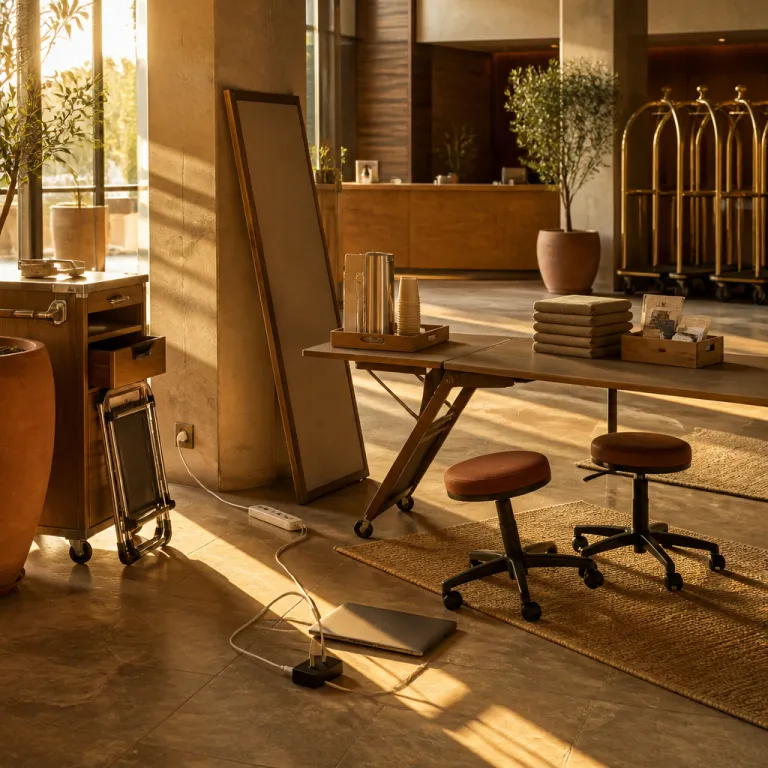
From empty lobby to productive hotel lobby workspace daytime revenue engine
Between checkout and early arrivals, the average hotel lobby quietly bleeds potential revenue. The real shift happens when general managers start treating this underused space as a calibrated hotel lobby workspace daytime revenue engine rather than a decorative waiting room. Once you frame the lobby as a flexible workspace asset, every chair, table and power outlet becomes part of a measurable hotel revenue strategy.
Across many hotels, lobby areas sit half empty from 10 AM to 4 PM while rooms are being turned and meeting rooms remain underused. Yet remote workers, local freelancers and business travelers are actively searching for work friendly working spaces with reliable high speed connectivity and professional hospitality services during that exact day part. Hotels that align this demand with their idle spaces create new revenue streams that complement traditional hotel rooms and meeting rooms performance.
The dataset from a 16 room boutique hotel in Malasaña shows how a modest lobby workspace can host around 10 users per day and generate roughly 4 800 euros per month in incremental revenue. Scaled to larger hotels with more rooms and more flexible areas, the hotel lobby workspace daytime revenue potential becomes material for any P&L focused équipe. This is not a co working label play ; it is a precise reprogramming of lobby space to capture day bookings, food and beverage spend and long term revenue growth from a new community of hotel guests and local users.
Designing lobby areas for the 7 AM to 6 PM workday rhythm
Designing for hotel lobby workspace daytime revenue starts with an honest look at how your lobby behaves hour by hour. Morning from 7 AM to 10 AM belongs to hotel guests and business travelers who want to work before checkout, while local remote workers start drifting in once cafés fill up. From 10 AM to 3 PM, the lobby is usually at its emptiest, which makes this window the prime opportunity to position your lobby as a work friendly workspace for both hotel guests and the local community.
To make that shift, you need clearly defined working areas with ergonomic chairs, stable tables and enough power outlets to support laptops in all working spaces. High speed Wi Fi, quiet zones and a few semi enclosed rooms or booths turn a generic space into a credible workspace that can compete with co working spaces and cafés. Amenities vary but often include Wi-Fi, desks, power outlets, and refreshments.
From 3 PM to 6 PM, the same lobby must transition from focused work to softer social space without killing hotel lobby workspace daytime revenue. A practical rule of thumb is to keep a 60 40 desk to sofa ratio before 3 PM, then gradually flip that balance as check in peaks and evening food and beverage service ramps up. Occupancy sensors and a data layer, as outlined in this analysis of real time pricing for profitable hotel workspaces, help you track which areas perform best by hour, by type of user and by spend.
Revenue mechanics and pricing models that respect both guests and P&L
Once the lobby is work ready, the next question is how to structure hotel lobby workspace daytime revenue without alienating hotel guests. The most resilient programmes blend three layers of revenue streams : paid day passes, recurring memberships and incremental food and beverage spend from both hotel guests and local users. Prices in many European hotels range from about 15 to 30 euros per day, with monthly memberships between roughly 150 and 280 euros, which gives a useful benchmark when you build your own business case.
For a midscale property with 150 hotel rooms and generous lobby space, a simple model might target 20 day bookings on weekdays, each generating a workspace fee plus at least one food and beverage transaction. If each remote worker spends on coffee, lunch and perhaps an afternoon snack, your average revenue per workspace seat per day can rival low yielding meeting rooms or underused day rooms. The key is to track revenue per square metre per hour across the lobby, meeting rooms and other areas, not just nightly room revenue.
Ownership will ask how this affects core hotel revenue and whether it dilutes the brand. A structured deck, such as the framework outlined in this guide to building the hotel coworking business case, helps you show how lobby workspace programmes lift total hotel revenue by filling the 10 AM to 4 PM valley. When you can demonstrate that workspace users convert into future work stays, group enquiries and premium day hotel or rooms by day bookings, the conversation shifts from experiment to long term real estate strategy.
Staffing, service choreography and the guest journey across the day
Hotel lobby workspace daytime revenue depends as much on service choreography as on furniture layouts. A dedicated workspace host from 8 AM to 4 PM anchors the programme, greeting remote workers, managing access, upselling food and beverage and protecting the work friendly atmosphere. After 4 PM, a hospitality concierge can take over, shifting the tone toward social while still supporting guests who want to work in quieter areas.
The guest journey should feel seamless whether someone is a hotel guest, a local business user or a first time remote work visitor. Clear signage at the entrance, a simple QR based check in for day hotel workspace passes and visible information about services and high speed Wi Fi make the offer legible without heavy branding. Many hotels offer workspace access to non-guests; check with the specific hotel for details.
Operationally, you will need new SOPs that define how front office, F&B and housekeeping coordinate around lobby working spaces and adjacent rooms. For example, housekeeping can time noisy tasks away from the 10 AM to 3 PM focus window, while F&B teams adjust menus toward working lunches and light snacks that can be eaten at a laptop friendly space. When the équipe understands that every occupied seat between checkout and check in is a revenue opportunity, behaviour shifts and hotel lobby workspace daytime revenue becomes a shared KPI rather than a side project.
From pilot to portfolio: scaling workspace programmes across hotels
Once a single property proves that hotel lobby workspace daytime revenue can be both material and operationally manageable, asset managers start asking how to scale. The first step is to codify what worked : target segments, pricing, desk to sofa ratios, F&B bundles and staffing patterns that balanced work and hospitality. Then you can adapt this playbook to different hotels in the portfolio, from compact urban properties with 80 rooms to larger convention hotels with expansive public spaces.
Data from the Malasaña case shows that even a 16 room hotel can support around 10 workspace users per day and generate several thousand euros per month from lobby work programmes. In a 300 room business hotel with multiple meeting rooms and generous lobby areas, the same logic can unlock far larger revenue opportunities from remote workers, local companies and day hotel users. Collaboration with local businesses and co working platforms can accelerate demand, especially when you position your lobby as a reliable alternative to traditional working spaces with better hospitality services and more flexible access.
Portfolio level success also depends on aligning real estate strategy with the future work landscape. Hybrid work patterns mean that remote work is no longer a niche, and hotels that offer credible workspace options become natural hubs for both hotel guests and the surrounding community. Case studies such as the hybrid event and workspace configuration at Stadshotel Den Haag, analysed in depth in this piece on how event space capacity supports media coworking operations, show how flexible meeting rooms, lobby space and day rooms can be orchestrated to maximise hotel revenue across every part of the day.
FAQ
How many day pass users does a lobby need to break even ?
The break even point for hotel lobby workspace daytime revenue depends on your staffing costs, F&B margins and real estate constraints. As a directional benchmark, a small 16 room hotel in Malasaña supports around 10 users per day and generates roughly 4 800 euros per month from workspace programmes. Larger hotels with more rooms and higher fixed costs may need 20 to 30 paying users per weekday, especially if they employ a dedicated workspace host.
What amenities are essential for a credible hotel workspace ?
At minimum, you need high speed Wi Fi, comfortable seating, stable tables and abundant power outlets in all working areas. Quiet zones, a few semi private rooms or booths and access to quality food and beverage services help you compete with co working spaces and cafés. Many successful hotels also offer printing, secure storage and priority access to meeting rooms for workspace users.
How should hotels price day passes and memberships ?
Workspace pricing should reflect your local market, your brand positioning and the quality of your services. Many European hotels charge between 15 and 30 euros per day for lobby workspace access, with monthly memberships typically ranging from 150 to 280 euros. Bundling coffee, water and a light lunch into a slightly higher day rate often increases total revenue while simplifying the offer for guests.
Does a lobby workspace programme disturb traditional hotel guests ?
When designed carefully, lobby workspace programmes can enhance the guest experience rather than disrupt it. Clear zoning between quiet working spaces and social areas, along with thoughtful acoustic design, protects both remote workers and leisure guests. Many hotel guests appreciate having a professional workspace on site, especially business travelers who need to work between meetings or before evening flights.
How do workspace programmes impact long term hotel revenue ?
Hotel lobby workspace daytime revenue adds a new layer of income that peaks when room revenue dips, which smooths daily cash flow. Over time, workspace users often convert into overnight stays, meeting room bookings and corporate contracts, which strengthens overall hotel revenue. For asset managers and directions immobilières, this turns the lobby from a cost centre into a flexible real estate asset aligned with the future work economy.