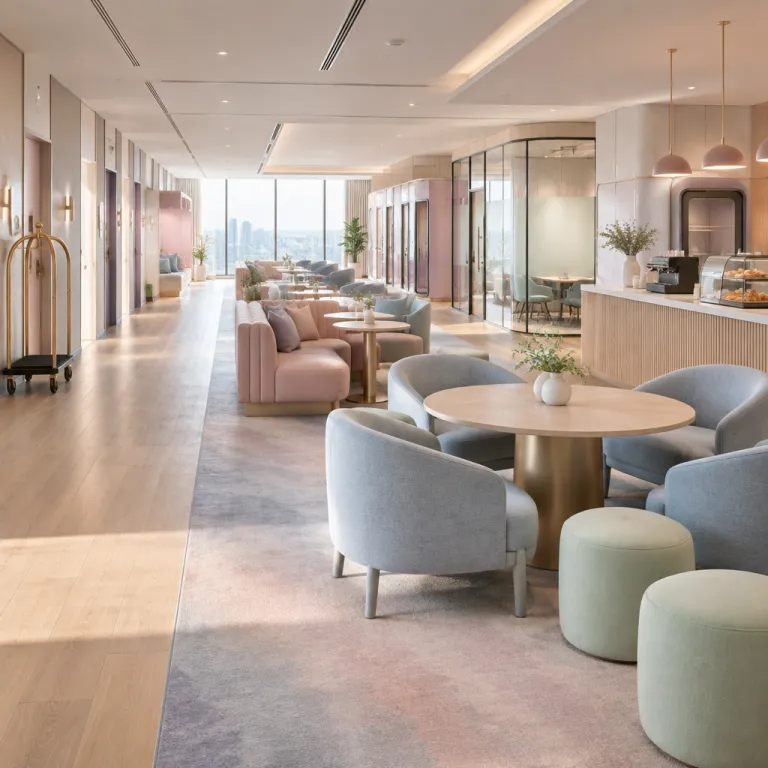
From desk revenue to asset story: reframing hotel workspace value
Hybrid hospitality only matters to an owner when it moves the asset story at sale. The real question behind any hotel workspace asset valuation exit multiple is whether those desks, meeting pods, and media coworking zones change how a buyer underwrites the property and its long term cash flows. If workspace income does not shift the buyer’s view of risk, cap rate, and holding period assumptions, it remains a nice operational experiment rather than a hotel investment thesis.
For senior hotel management and asset managers, the pivot is simple but radical. Workspace is not just incremental business layered on top of hotel operations ; it is a structural change in how the property earns money across the day, the week, and the season, which can reshape hotel valuation and the treatment of non-room cash flow in real estate models. When owners operators accept that, they start asking how media coworking in hotels can be documented, contracted, and benchmarked so that it survives a change of control and supports a tighter exit multiple.
Traditional hotel valuation methods still anchor on occupancy ADR, RevPAR, and a room-led narrative. Appraisers trained on Cornell University and Cornell Hotel School frameworks often treat ancillary hospitality revenues as volatile, applying conservative valuation methods and higher discount rates to non-room cash flows. Hybrid workspace challenges that method because contracted memberships, corporate seats, and recurring media production packages can behave more like office real estate income than transient hotel operations, especially in urban hotels resorts with dense corporate demand.
For a hotel real estate portfolio, that distinction is not academic. If workspace income is proven, diversified, and underpinned by multi year agreements, it can be capitalised at a lower cap rate than bar or banquet upsell revenue, which directly lifts the hotel workspace asset valuation exit multiple. The same euro of cash flow from a three year workspace contract can be worth more at exit than a euro from walk in day passes, because the perceived risk profile is different in the eyes of institutional investments committees.
Asset management teams who ignore this nuance leave value on the table. A hotel asset with a credible hybrid floor, clear reporting, and transferable operating playbook can be positioned as a mixed use property with resilient cash flows, not just a hospitality business with a trendy lobby. That repositioning can change which buyers show up, how they structure their investment, and what they will pay for the property at the end of the holding period.
How lenders and appraisers underwrite workspace income today
Most lenders and appraisers still treat hotel coworking and media workspace as ancillary, even when the operations are sophisticated. In many valuation reports, workspace sits in a catch all line with spa, parking, or other minor business units, which dilutes its impact on the overall hotel workspace asset valuation exit multiple. That treatment reflects a conservative risk view rather than a deep analysis of the actual contracts, churn, and cash flow stability.
When appraisers apply income based valuation methods, they typically separate room revenue from other hospitality income streams. The room component is often capitalised using market supported cap rate benchmarks for hotels resorts, while non-room cash flows are either given a higher cap rate or a shorter explicit forecast period, which reduces their contribution to the final property value. For workspace to move the needle, owners operators must provide evidence that these cash flows behave more like stable real estate income than like volatile banquet upsell.
That evidence starts with segmentation. Contracted corporate workspace seats, long term media studio subscriptions, and B2B meeting packages can be modelled with lower risk assumptions than walk in day passes or ad hoc hot desk sales. A lender looking at a hotel investment will always ask how much of the workspace revenue is contracted, what the churn rate is, and how diversified the client portfolio looks across industries and companies. Without that granularity, the default method is to haircut the income and treat it as fragile.
Seasonality also matters in underwriting. A hotel that uses summer bleisure demand to fill all day workspaces, as in dynamic models described in analyses of the summer bleisure window for workspace bookings, can show how workspace smooths cash flows across the year rather than amplifying volatility. That smoothing effect can support a more favourable cap rate for the blended asset, because lenders see a more balanced revenue profile across weekdays, weekends, and shoulder periods.
From a technical standpoint, appraisers trained at Cornell Hotel School or similar institutions are comfortable with discounted cash flow models. They will respond to clean, multi year projections of workspace cash flows, backed by historical performance and realistic ramp up assumptions. Asset managers who can present workspace as a distinct mini portfolio within the hotel, with its own contracts, KPIs, and risk analysis, give underwriters a reason to treat that income as more than just ancillary hospitality noise.
None of this works without disciplined hotel management reporting. If workspace revenue is buried inside “other income” on the P&L, no amount of narrative will convince a lender that the hotel asset deserves a premium valuation. Only when the data is separated, audited, and tied to real contracts will the underwriting community start to adjust the hotel workspace asset valuation exit multiple in a systematic way.
Designing workspace income that earns a real exit multiple
Not all workspace euros are created equal when you sell a hotel. The structure of the income stream, not just its size, determines how much it will move the hotel workspace asset valuation exit multiple in a buyer’s model. Owners operators need to design workspace products with the exit lens in mind, not just the in year GOP uplift.
Contracted corporate memberships and fixed term media studio packages are the gold standard. These products create predictable cash flows that resemble office leases more than transient hospitality spend, which allows buyers to apply lower cap rates and longer forecast periods in their valuation methods. When a hotel real estate investor can underwrite three to five years of contracted workspace income, they often treat it as part of the core asset story rather than as opportunistic upside.
By contrast, pure walk in day pass models, even when dynamically priced, tend to be treated as higher risk. They are still valuable for operations and can be optimised through sophisticated pricing engines, as shown in analyses of desk by the hour pricing powered by occupancy forecasting. Yet from a valuation perspective, these cash flows often receive a conservative multiple because they depend heavily on local demand cycles, marketing spend, and the charisma of the on site team.
Hybrid models can bridge the gap. A hotel that combines a base of contracted corporate seats with flexible day passes and meeting room upsell can present a layered income story to buyers, where the contracted layer anchors the valuation and the flexible layer is treated as upside. Asset management teams should work with hotel operations to ensure that contracts are transferable on sale, that change of control clauses are manageable, and that the workspace brand does not rely on a single founder or influencer relationship.
Media coworking adds another dimension. When hotels host podcast studios, video sets, or content labs with recurring clients, they create specialised cash flows that can differentiate the property in a crowded hospitality market. Buyers who run diversified real estate portfolios may value that uniqueness, but only if the business is systematised and not dependent on one creative director or a fragile local scene.
To earn a real exit multiple, workspace income must look like a repeatable system, not a passion project. That means documented operating procedures, clear brand standards, and technology that can be handed over to new hotel management or new asset managers without losing performance. When those elements are in place, the hybrid floor stops being a design story and becomes a core part of the property’s investment narrative.
Reporting discipline: turning hybrid floors into institutional grade assets
The biggest gap between workspace hype and valuation reality is reporting. Many hotels run vibrant coworking and media spaces, but their financial statements do not isolate the cash flows in a way that supports a stronger hotel workspace asset valuation exit multiple. Institutional buyers and lenders will not pay for what they cannot see, segment, and stress test.
To change that, asset management teams must treat workspace as a distinct line of business within hotel operations. That starts with a dedicated revenue centre in the chart of accounts, separate cost tracking, and monthly reporting that breaks down income by product type, client segment, and contract duration. When a buyer can see three years of workspace P&L with stable margins and low churn, the risk premium attached to that income shrinks materially.
Owners operators should also align their reporting with how real estate investors think. That means presenting workspace performance not only in terms of occupancy ADR equivalents, but also as cash flow yield on invested capital, payback period for fit out, and contribution to overall property valuation. A clear bridge from workspace EBITDA to incremental asset value, using transparent cap rate assumptions, helps buyers plug the numbers into their own investment methods without friction.
Hybrid hospitality pioneers sometimes underestimate the importance of auditability. Institutional capital will scrutinise contracts, cancellation clauses, and any revenue share agreements with third party coworking operators, especially when media production rights or intellectual property are involved. Clean, standardised documentation reassures buyers that the hotel asset is not exposed to hidden legal risk or operational dependencies that could undermine the projected cash flows.
There is also a portfolio angle. When a hotel group can show consistent workspace performance across multiple hotels resorts, with comparable KPIs and similar valuation uplift, the story becomes scalable. Asset managers can then argue that the hybrid floor is not just a one off success, but a repeatable investment play across the real estate portfolio, which can influence corporate level valuation and M&A discussions.
Finally, reporting discipline supports better internal decisions. When management teams see precise data on workspace utilisation, pricing power, and client retention, they can refine the business method, adjust investments, and manage risk proactively. Over time, that operational excellence feeds back into the market’s perception of the asset, reinforcing the case for a premium hotel workspace asset valuation exit multiple at the next transaction.
Key figures that shape workspace driven hotel valuation
- In many institutional transactions, even a 25 to 50 basis point improvement in the blended cap rate applied to a hotel asset can translate into several million dollars of additional value for a large urban property, which shows why recurring workspace income that supports a tighter cap rate can outweigh the annual desk revenue.
- For mixed use hospitality and real estate assets, investors often model holding periods between five and ten years, so a stable stream of contracted workspace cash flows over that horizon can have a disproportionate impact on discounted cash flow valuations compared with short term, highly volatile ancillary revenues.
- Industry surveys of asset managers and hotel owners have reported that a growing share of respondents now classify coworking and flexible workspace income as a core component of hotel operations rather than as minor ancillary business, signalling a shift in how these cash flows are treated in portfolio level investment decisions.
- Benchmarking studies from leading hospitality schools such as Cornell University and other research institutions have highlighted that diversified income streams can reduce earnings volatility in hotels resorts, which in turn can justify lower risk premiums and support higher valuation multiples for properties with well managed hybrid floors.
- Transaction analyses in urban real estate markets show that hotels with credible, transferable non room income streams, including coworking and media workspace, tend to attract a broader pool of buyers, which can increase competitive tension in bidding processes and support stronger exit pricing for owners operators.