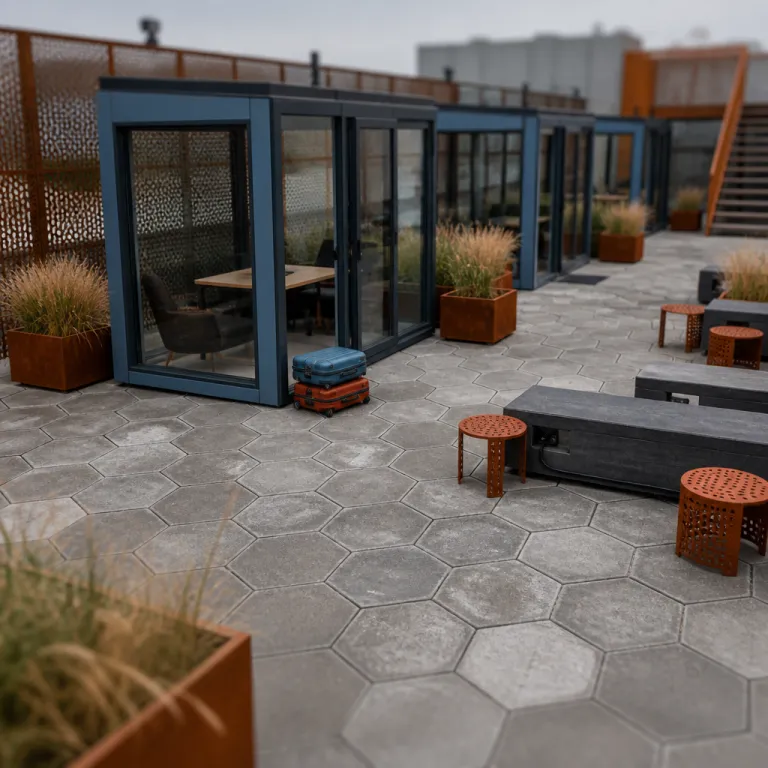
Why bleisure travel now defines the new corporate travel baseline
Bleisure travel has moved from niche perk to default expectation for business travelers. Recent analyses from Fortune Business Insights and Grand View Research estimate that the global bleisure travel market was already worth roughly USD 760 billion in 2024 and is on track to approach USD 850 billion by 2026, with long term projections ranging from USD 2.2 trillion to USD 3.5 trillion by the early 2030s. This places hybrid business leisure demand firmly at the center of the wider travel market. For hotel operators, asset managers, and coworking brands, this means that every business trip, every work trip, and every corporate travel booking now carries a measurable upside in leisure time and incremental revenue.
Across segments, surveys from Agoda, Engine, and Skift indicate that around 83 % of business travellers have taken at least one bleisure trip in the past year, and 89 % say they want to add leisure time to their next business trip. Employees now treat work trips as a strategic way to extend personal activities rather than a sacrifice of personal time. In parallel, industry data shows that the bleisure travel market is growing at a double digit compound annual growth rate that outpaces traditional business travel and pure leisure segments. For revenue leaders, this shift means that business travel and leisure travel are no longer separate verticals but two sides of the same business personal journey that must be priced, packaged, and serviced as one.
Bleisure guests behave differently from classic corporate travelers because they optimise both travel expense and personal expenses across a single trip rather than separating them. They are more likely to accept higher ADR when they see clear value in workspace quality, lobby coworking access, and on site leisure activities that justify extending their stay beyond core business trips. For hotel teams, this creates a new layer of expense management expectations, where the travel expense line for the company and the personal expense line for the employee intersect in the same booking, the same invoice, and often the same room night. As one regional revenue director at a European hotel group put it in an internal benchmark, “Our highest value guests are now the ones who stay an extra three nights to work from the lobby and explore the city on their own time.”
How booking patterns for bleisure trips reshape revenue strategy
Bleisure trips follow a distinct booking logic that revenue and commercial directors can no longer ignore. Most hybrid business leisure stays still start as a standard corporate reservation booked under travel policy constraints, but travellers decide to add leisure time and extra nights after the original reservation is confirmed. This post booking extension window, typically 2 to 4 days, is where hotels with strong workspace features and clear bleisure travel positioning win incremental revenue from both business travellers and their accompanying partners or family.
Data from Engine, Skift, and other travel market analysts shows that 76 % of business travelers are planning at least one bleisure trip in 2026, which aligns with the 83 % adoption rate reported by Hotel Tech Report and confirms that bleisure travel is now a structural driver of occupancy, not a seasonal anomaly. For operators, the key is to identify when a standard business trip in the PMS is likely to convert into a business leisure stay, then surface targeted offers that bundle late checkout, coworking day passes, and local leisure activities at the right time. This is where media and content around the summer bleisure window and converting peak season room demand into all day workspace bookings, as analysed on specialised hybrid hospitality benchmarks, becomes operationally useful.
From a policy perspective, employers are gradually updating travel policy documents and related policies to clarify what counts as business travel, what counts as personal time, and how mixed business personal itineraries should be handled. Clear rules on what portion of a business trip is reimbursable, which travel expense lines are considered personal expenses, and how expense management tools should code bleisure trips are now essential for both finance teams and hotel sales managers negotiating corporate travel contracts. Hotels that can articulate these nuances to corporate buyers, and help them align employee expectations with corporate policies, will secure preferred status for the next cycle of RFPs.
Workspace features that actually extend stays for bleisure travelers
When business travellers decide whether to turn a standard business trip into a bleisure trip, workspace quality is often the decisive factor. Reliable Wi Fi, ergonomic seating, abundant power outlets, and quiet zones are no longer nice to have amenities for global bleisure guests; they are the baseline that allows employees to justify extra leisure time without compromising work outcomes. In practice, travellers extend stays where the lobby table, the espresso, and the natural light align better than in their usual office, and where the check in desk does not judge them for not having a room key for every day they use the space.
Properties investing in coworking lounges, day pass products, and media friendly public spaces see a clear uplift in length of stay and total travel expense captured per guest, because they convert daytime work activities into incremental F&B and meeting room revenue. Mews and other hospitality tech providers report that hotels with strong connectivity and digital nomad packages capture higher value guests with longer stays, which directly supports RevPAR and TRevPAR growth in the bleisure travel segment. For asset managers, this means that lobby energy, daytime occupancy of public spaces, and workspace utilisation should be tracked as seriously as room occupancy, with dedicated sustainability and energy KPIs as argued in analyses of the lobby energy footprint and why day occupied public spaces need their own sustainability KPI on hybrid hospitality research platforms.
From a corporate perspective, employers will support bleisure travel more actively when they see that hotel coworking spaces genuinely enable productive work trips and not just extended holidays. When a property can show that its coworking lounge reduces employee stress, supports focused work, and integrates seamlessly with corporate travel policy requirements, HR and travel managers are more willing to endorse bleisure trips as part of their wellbeing and retention strategy. In this context, the hospitality industry is adapting to bleisure travel by offering accommodations with workspaces and leisure amenities, and by positioning these hybrid products as a practical answer to the question of how to combine business and leisure in a single trip.
Media coworking in hotels as the operating system of bleisure travel
Media coworking in hotels turns the property into a live content studio for bleisure travel, where business, leisure, and work intersect in visible, marketable ways. When travellers see other employees hosting video calls in the lobby, recording podcasts in a glass meeting room, or editing content in a quiet corner, they understand that this is a place where work trips and personal activities can coexist without friction. For hotel operators and coworking providers, this visible blend of business travel and leisure time is a powerful signal that attracts both bleisure travelers and local members.
From a commercial strategy standpoint, media coworking spaces allow hotels to monetise daytime hours that were historically underused, while also supporting corporate travel clients who need flexible workspaces for their teams. By packaging meeting studios, podcast rooms, and content ready lounges into corporate travel offers, hotels can position themselves as partners in business personal productivity rather than just bed providers. This approach aligns with the growing demand for flexible work policies, where companies encourage employees to combine trips and reduce total travel expense per project by staying longer in one destination instead of flying multiple times.
For asset managers and corporate real estate leaders, the key is to treat media coworking not as a side activity but as a core component of the asset’s revenue mix and brand positioning. A well designed coworking floor that supports both local members and in house business travellers can stabilise cash flow, improve NOI, and increase the asset’s valuation in a travel market where global bleisure demand is structurally rising. When these spaces are programmed with curated activities, from breakfast briefings to after work events, they also deepen guest engagement and turn occasional bleisure trips into recurring business leisure relationships with the property.
Corporate policies, expense management, and the new rules of bleisure
Bleisure travel only scales when corporate policies, HR practices, and expense management systems evolve in sync with employee expectations. Companies that still treat business trips and leisure trips as mutually exclusive categories create friction for employees who want to extend work trips for personal reasons, because they force awkward workarounds in travel expense reporting. In contrast, organisations that define clear travel policy rules for mixed business personal itineraries reduce compliance risk while unlocking higher satisfaction among frequent business travellers.
Progressive employers now specify in their policies which nights and activities qualify as business travel, which costs are considered personal expenses, and how employees should split invoices between corporate cards and personal cards. This clarity helps hotels position their offers more effectively, for example by creating rate codes that apply only to the business trip portion while offering separate leisure time packages that employees can book directly. For revenue directors, understanding these corporate travel frameworks is essential to negotiate dynamic pricing that respects policy limits while still capturing premium rates for extended stays and upgraded workspace access.
On the finance side, modern expense management tools increasingly support tagging of bleisure trips, allowing companies to track how often employees extend work trips and how this correlates with productivity, retention, and total travel expense. When HR and finance teams see that well managed bleisure travel improves employee satisfaction and reduces burnout without inflating overall travel costs, they are more likely to endorse flexible work policies that encourage such behaviour. Hotels that can provide clean folios, clear separation of charges, and reporting that aligns with these systems will become preferred partners in the next generation of corporate travel programs.
Competing for global bleisure guests against platforms and new entrants
The competitive landscape for bleisure travel is intensifying as platforms and alternative accommodations target the same high value segment of business travelers who extend stays. Airbnb’s entry into the hotel space in around 20 cities, with a price match guarantee and workspace focused listings, signals that global bleisure demand is now strategic for every major player in the travel market. Hotels cannot win this race on price alone; they must compete on workspace reliability, service quality, and the seamless integration of work and leisure activities.
For hotel groups, one of the strongest levers is to build long stay and nomad packages that explicitly address the needs of bleisure travelers who combine multiple business trips and leisure trips in a single region. Benchmarks of long stay nomad packages and which hotel groups are winning the 30 plus night segment, as analysed on specialist hybrid hospitality resources, show that extended stay offers with coworking access, laundry, and F&B credits outperform generic discounts. These products appeal to employees who want to minimise total travel time and travel expense by clustering work trips, while still enjoying meaningful leisure time between meetings.
At the same time, local coworking operators are becoming important partners in capturing global bleisure flows, because they can complement hotel inventory with additional desks, meeting rooms, and community activities. Strategic alliances between hotels and coworking brands allow both sides to serve business travellers more completely, offering a mix of on site and nearby workspaces that adapt to different work styles and policies. For asset managers and innovation leaders, the winning strategy is to treat bleisure travel as a long term structural shift, investing in media coworking, digital infrastructure, and service design that make every business trip feel like a flexible, high value business leisure experience.
Key figures shaping bleisure travel and hotel coworking
- The global bleisure travel market exceeded approximately USD 760 billion in 2024 and is projected around USD 850 billion in 2026, reflecting a strong double digit growth trajectory that outperforms traditional business travel segments (Fortune Business Insights, Grand View Research).
- Long term projections indicate that the wider bleisure travel market could reach USD 2.2 trillion to USD 3.5 trillion by the early 2030s, underscoring the structural nature of global bleisure demand for hotel investors and asset managers (Fortune Business Insights, Engine and Skift analyses).
- Survey data shows that 76 % of business travelers plan at least one bleisure trip in 2026, while 83 % report having already taken such a trip in the past year, confirming that bleisure is now a mainstream behaviour rather than a niche perk (Agoda and Hotel Tech Report statistics).
- Among those who extend business trips, most bleisure travelers add between 2 and 4 extra nights, which can increase total revenue per booking by 20 % to 40 % when hotels successfully monetise workspace access, F&B, and leisure activities (industry benchmarks from Mews and hybrid hospitality operators).
- Market research estimates a compound annual growth rate of around 12 % for bleisure travel between 2023 and 2030, signalling that hotels which invest early in coworking lounges and hybrid products will capture outsized share of future corporate travel budgets (Grand View Research).
FAQ: bleisure travel, hotel coworking, and corporate policies
What is bleisure travel and how does it affect hotels ?
Bleisure travel refers to combining business and leisure in a single trip, where an employee extends a work related journey to include personal time and activities. For hotels, this creates an opportunity to increase length of stay, upsell workspace access, and capture more F&B revenue from the same booking. It also requires clearer coordination with corporate travel policy rules and expense management expectations.
Why has bleisure travel become so popular among business travelers ?
Bleisure travel is popular because it enhances work life balance, increases travel satisfaction, and can even boost productivity when employees have time to decompress before or after intense meetings. Flexible work policies and remote work tools make it easier for travellers to stay connected while enjoying leisure time in destination. As a result, many business travellers now see work trips as a chance to explore rather than a burden.
How can companies support bleisure trips without losing control of costs ?
Companies can support bleisure trips by updating travel policy documents to define which nights and expenses are reimbursable and which are personal, then configuring expense management tools accordingly. Clear guidelines on flights, hotel nights, and leisure activities help employees plan responsibly while keeping corporate travel budgets under control. Many organisations also encourage combining multiple meetings into one extended business trip to reduce total travel expense and emissions.
What should hotels prioritise to attract bleisure travelers and bleisure travellers ?
Hotels should prioritise reliable Wi Fi, ergonomic workspaces, and access to coworking style areas that make it easy to work productively during the day. Curated local leisure activities, flexible check in and checkout times, and transparent billing that separates business and personal expenses also matter for both employees and corporate buyers. Properties that communicate these features clearly in their marketing and corporate RFPs are more likely to win repeat business from bleisure travelers.
How is the hospitality industry adapting its products for bleisure and remote work travel ?
The hospitality industry is adapting by creating hybrid rooms with dedicated work zones, launching coworking lounges in lobbies, and offering long stay packages tailored to remote workers and global bleisure guests. Many hotel groups now partner with coworking operators or build their own brands to serve both local members and in house business travellers. In practice, these hybrid hospitality concepts answer the core question of what bleisure travel is by showing how business and leisure can be combined in a single, well designed trip.