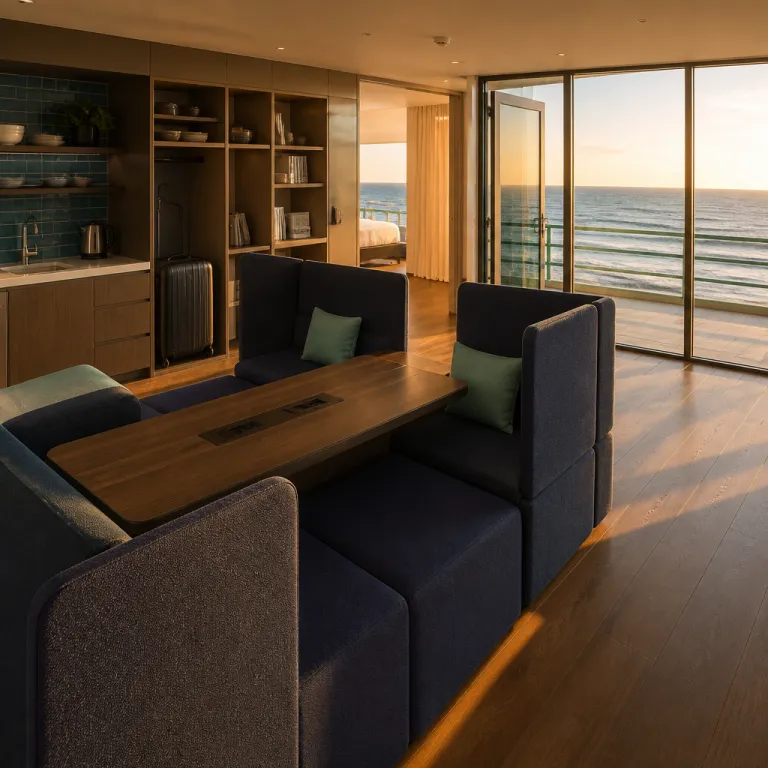
Why hotel remote work is now a core commercial strategy
Remote work has shifted from fringe perk to mainstream policy across corporate travel programs. When 79% of travellers in the United States and the United Kingdom report employers that support remote work, the extended stay becomes a realistic option rather than a rare exception. This figure comes from survey data cited by the Crowne Plaza brand and summarised by Wisk, and signals a structural change in how business trips are planned. For hotel management teams, this is no longer a side bet but a durable shift in demand that reshapes how every hotel office, lobby and guest room is programmed.
Hotel remote work demand is rising because it solves three problems at once for the business traveller. It offers a predictable workspace compared with a noisy café, it removes the friction of commuting to an external office, and it lets guests stretch trips by several days without burning extra vacation days. For hotel operators and asset managers, the question is not whether to serve this remote hospitality segment, but how to reach the right level of product definition and pricing discipline.
Market data backs the shift in behaviour and spend. Global Workplace Analytics reports a roughly 35% increase in remote workers since the early pandemic period, based on its published analysis of U.S. workforce trends, while internal hotel management reports aggregated across several hybrid brands suggest average extended stays now reaching around 14 days for remote workers who combine meetings and leisure. These 14-day figures are directional operator benchmarks rather than a single published study, but they align with broader industry commentary on longer business trips. Those extra days translate into higher RevPAR and more full time use of under monetised spaces, provided the main content of the offer is work ready rather than lifestyle fluff.
Remote hospitality also changes the talent equation inside hotels. New hospitality jobs are emerging around hybrid guest needs, from a specialist remote work concierge to a mid level community manager who curates programming for long stay guests. For HR directors, this creates fresh careers paths and entry level to senior level ladders that blend traditional front desk skills with remote customer support and social media fluency.
Corporate buyers are rewriting their travel policies to reflect this reality. Travel managers in the United States now benchmark hotels not only on rate and location, but on Wi Fi speed, desk ergonomics and quiet hours policies that protect remote work productivity. In this context, every hotel remote work decision becomes a commercial lever, not a design afterthought decided months ago in an isolated renovation meeting.
What remote workers actually look for before they book a hotel
Search behaviour around hotel remote work is brutally pragmatic. Business travellers compare workspace photos in hotels versus home rentals, zooming in on desk size, chair quality and the number of visible power outlets. Properties that treat the workspace as main content in their galleries, rather than an afterthought behind the bed, consistently convert more remote work searches into bookings.
Three filters dominate remote work decision making. First, reliable Wi Fi with a clearly stated minimum speed, ideally above 50 Mbps for video calls and cloud based office tools. Second, a real desk with an ergonomic chair, natural light and a layout that separates the work hotel zone from the sleep area, especially in compact rooms where the level of visual clutter can make or break concentration.
Third, remote workers want a clear promise around noise and availability. Quiet hours policies that are actually enforced, plus access to backup coworking spaces either inside the hotel or within a short walk, reassure remote customer segments who cannot risk dropped calls. Hotels that publish these details transparently, including any privacy policy related to data on Wi Fi networks, win trust from corporate travel managers and HR leaders.
Extended stay guests also care about food and beverage during office hours. They expect coffee that does not shut down at 10 a.m., light lunches that can be eaten at the desk, and room service or grab and go options that work for late days on different time zones. When these services are bundled into long stay or nomad packages, as analysed in depth in this guide to which hotel groups are winning the 30 plus night segment, the perceived value of a full time stay increases sharply.
Remote hospitality guests also scrutinise staffing and service promises. They look for evidence that the front desk understands remote work needs, from printing and parcel handling to flexible housekeeping that does not interrupt calls. Hotels that train a specialist remote work liaison, even at entry level, can turn routine customer service interactions into loyalty building moments for both individual travellers and corporate accounts.
Finally, booking patterns show that early planner behaviour is real in this segment. Remote workers often book several days earlier compared with traditional business travellers, because they need to align flights, meetings and personal plans. Revenue managers who recognise this and open targeted hospitality jobs style offers early, with clear cancellation terms, can capture demand before it leaks to home rentals or pure coworking plus budget hotel combinations.
From lobby to workspitality hub: defining hotel coworking concepts
Hotel remote work is not about slapping a coworking label on a corner table. It is about designing a continuum of spaces where a guest can move from deep focus to informal meetings to social time, without ever feeling like an intruder in a lobby built only for transient check ins. The most advanced hotels now talk about workspitality, a frame that treats work as a primary use case for public spaces rather than a tolerated side activity.
Brands such as The Hoxton, Zoku, citizenM and Selina show how different concepts can target different remote work segments. The Hoxton leans into lobby as coworking, with long communal tables, strong coffee and a social media friendly aesthetic that attracts both hotel guests and locals. Zoku flips the script in the room, turning loft style spaces into office first environments where the bed disappears and the desk dominates, while citizenM builds subscription models that let remote workers treat multiple hotels as a distributed office network.
For operators and asset managers, the key is to define which hotel coworking concept fits the building, the market and the brand. A central business district property in New York may prioritise day pass users and office overflow, while a resort in the United States sunbelt might focus on long stay digital nomads who blend poolside days with intense remote work sprints. In both cases, the level of design detail around acoustics, power access and sightlines will determine whether the space feels like a real office or a noisy bar with laptops.
Language matters in positioning. As argued in this analysis on why workspitality is a sharper frame for hotel public spaces, guests care less about the coworking tag and more about whether the table, the outlet and the coffee align with their remote work rhythm. This is where a specialist remote work manager can bridge design intent and operational reality, adjusting layouts by time of day and managing the mix between hotel guests and external members.
Workspitality also reshapes staffing structures and hospitality jobs. Entry level roles at the front desk now include light community management, while mid level managers oversee programming such as office hours with local founders or social media clinics for freelancers. Senior level leaders, from general managers to asset directors, must integrate these spaces into long term asset plans rather than treating them as temporary experiments that can be reversed quickly when group demand returns.
Designing the workday: zoning, ergonomics and tech for hotel remote work
Designing for hotel remote work starts with a simple question. Where does the laptop actually land during a typical day, and how many different surfaces does a guest need between 8 a.m. and 8 p.m. ? The answer usually spans the guest room desk, a lobby table, a semi private booth for calls and sometimes a terrace or bar stool for late afternoon emails.
Effective zoning separates these functions without killing the social energy that makes hotels attractive compared with anonymous offices. Concentration zones need acoustic treatment, individual tables, task lighting and clear behavioural cues that this is a quiet area, while collaboration zones can tolerate more buzz and flexible furniture. A practical framework for this is laid out in this guide to zoning the work lobby for concentration, collaboration and calls, which many facility designers now use as a checklist when rethinking public spaces.
Technology is the second pillar. Remote work guests expect frictionless connectivity, from fast Wi Fi to plenty of USB C and power sockets at every level of seating, plus screens or small meeting rooms that can be booked by the hour. Hotels that offer fully remote check in and digital keys free up front desk staff to focus on higher value customer service, such as helping a remote customer troubleshoot a VPN issue or find a quiet corner for an urgent call.
Ergonomics cannot be an afterthought if a property wants to charge a premium for hotel remote work. Chairs must support eight hour days, not just thirty minute emails, and desks should be deep enough for a laptop, notebook and coffee without feeling cramped. When these basics are met, hotels can layer in brand specific touches, from curated art that reads well on camera to social media ready backdrops that make video calls look polished rather than improvised.
Data governance also enters the design conversation. Remote hospitality guests often handle sensitive documents and expect clear communication about the hotel privacy policy, especially around shared printers, meeting room screens and public Wi Fi networks. Hotels that publish transparent policies and train staff to answer basic data security questions build trust with corporate travel managers in the United States and beyond, who increasingly treat digital safety as part of duty of care.
Revenue, pricing and staffing models for extended-stay remote guests
From a revenue perspective, hotel remote work is not a side hustle. It is a chance to stabilise occupancy, lengthen average stays and monetise underused spaces at a higher yield than traditional transient business. The commercial challenge is to structure offers that feel fair to guests while protecting rate integrity and avoiding channel confusion.
Pricing data from hybrid hospitality leaders shows that remote workers accept a 10 to 20% premium over standard rates when workspace amenities are guaranteed. This 10–20% range is based on a mix of published case studies and anonymised operator anecdotes rather than a single global benchmark, but it appears consistently in internal pricing reviews. That premium is justified when the room or suite functions as a real office, with fast Wi Fi, an ergonomic chair, a large desk and access to quiet zones outside the room. For asset managers, this means modelling not just ADR, but the incremental revenue from day passes, meeting room hours and food and beverage consumed during office style days.
Staffing models must evolve in parallel. Hotels are creating new hospitality jobs that sit between traditional roles and tech enabled service, such as a specialist remote work coordinator who manages desk bookings, monitors Wi Fi performance and acts as a point of contact for remote customer issues. Entry level staff at the front desk can be trained to handle basic coworking style tasks, while mid level managers oversee community events and partnerships with local businesses that enrich the workday.
Career paths also change as remote hospitality matures. Senior level leaders can move from one property to a cluster role overseeing workspitality across several hotels, while specialists in social media and digital marketing focus on attracting remote workers through targeted campaigns. For HR teams, this opens new careers narratives that make the sector more attractive to applicants who might otherwise look at pure tech or office jobs in cities like New York or other major hubs in the United States.
One operational advantage of extended stay remote guests is predictability. When the average stay reaches 14 days, based on aggregated internal hotel management data rather than a single published study, managers can plan staffing, inventory and programming with more confidence than for one night corporate traffic. However, this also raises expectations around consistency, because a guest who has been in house for several days will quickly notice any drop in service level, from cleaning standards to the reliability of the workspace they use every day.
Competing with coworking spaces and home offices: where hotels win
Hotels entering the remote work arena face two powerful competitors. On one side are pure coworking operators with deep expertise in office design and community building, and on the other side is the home office, which for many knowledge workers still feels like the default. To win, hotels must lean into what they do best rather than trying to copy either model.
The hospitality layer is the differentiator. A hotel can offer 24/7 staffed reception, on demand housekeeping, room service and security in a way that most coworking spaces cannot match, especially outside major cities like New York. For remote workers who travel frequently across the United States, this combination of comfort and service can justify leaving the home office for several days at a time, particularly when loyalty points and corporate rates soften the cost.
Hotels also have an advantage in flexibility. A guest can arrive as an early applicant for a remote job interview, stay for a few days of meetings, then extend into a weekend of leisure without changing buildings or routines. This fluidity between work and rest is hard to replicate in a traditional office or coworking environment, where access is usually tied to business hours and fixed memberships rather than dynamic, full time stays.
To capitalise on this, hotels must communicate clearly what their remote hospitality offer includes. That means spelling out desk quality, Wi Fi guarantees, quiet zones and any specialist remote support in booking paths, not burying these details deep in generic main content. It also means aligning the privacy policy, terms and conditions and customer service scripts so that remote workers feel their data, time and focus are respected.
Finally, hotels should not underestimate the power of narrative in attracting this segment. Social media campaigns that show real guests working from beautifully lit lobbies, focused booths and terrace tables can shift perception from “noisy lobby with laptops” to “serious workspace with hospitality baked in”. When this story is backed by consistent experience on property, hotels can turn occasional remote work visits into repeat careers style patterns, where the same guests return month after month, year after year.
Operational playbook: how hotel teams execute remote work at scale
Translating a hotel remote work strategy into daily operations requires coordination across departments. Hotel management, marketing teams and facility designers must work as a single équipe rather than separate silos, because guests experience the product as one continuous journey. From the first social media ad to the last interaction at the front desk, every touchpoint either reinforces or undermines the remote work promise.
The dataset for this market shift is already clear. Hotels are adapting to attract extended stay remote workers with coworking style spaces, flexible booking options and enhanced in room work amenities, using tools such as market research, guest feedback surveys and competitive analysis to refine their offers. As one internal briefing puts it without ambiguity : "High-speed Wi-Fi, dedicated workspaces, and flexible stay options."
On the ground, managers should start with a simple audit. Walk the property as if you were a remote customer arriving for a 10 day stay, noting every friction point from check in to the first video call, and then map which team owns each fix. Some issues will be design related, such as lack of power outlets or poor acoustics, while others will be service related, such as inconsistent information about workspace availability or unclear pricing for day use of meeting rooms.
Training is the next lever. Entry level staff need scripts and checklists that help them handle common remote work questions, from printing and parcel handling to explaining the privacy policy for shared devices, while mid level supervisors monitor patterns and escalate recurring issues. Senior level leaders, including the general manager and asset director, should review remote hospitality KPIs alongside traditional metrics, tracking workspace utilisation, average length of stay and ancillary revenue from work related services.
Finally, continuous improvement must be baked into the culture. Encourage early feedback by inviting guests to comment on their workspace experience within the first days of their stay, not only at check out, and act on that data quickly rather than filing it away for a review weeks later. Over time, this loop turns hotel remote work from a one off project into a durable competitive advantage that keeps properties relevant as work, travel and life continue to blend.
Key figures shaping hotel remote work
- Remote workers have increased by around 35% since the early pandemic period, according to Global Workplace Analytics, creating a structurally larger audience for hotel remote work products. This figure is drawn from the organisation’s published research on remote work adoption.
- Average extended hotel stays for remote and hybrid guests now reach approximately 14 days, based on aggregated hotel management reports across several hybrid hospitality brands and shared as directional operator anecdotes, which significantly boosts total revenue per booking compared with traditional two night business trips.
- Survey data from the Crowne Plaza brand, cited by Wisk, indicates that 79% of travellers in the United States and the United Kingdom have employers that support remote work, expanding the pool of potential extended stay business travellers.
- Pricing benchmarks across hybrid hospitality brands show that remote workers are willing to pay a 10 to 20% premium over standard rates when hotels guarantee fast Wi Fi, ergonomic desks and access to quiet work zones. These figures combine published case studies with internal benchmarking shared by operators and should be read as indicative ranges rather than a universal rule.
- Properties that feature dedicated workspace photos as main content in their booking galleries see higher conversion from remote work related searches, as guests compare hotel workspaces directly with home office and coworking alternatives. This pattern appears consistently in A/B tests and channel performance reviews shared by revenue managers.
FAQ: hotel remote work and extended-stay business travellers
What amenities do remote workers expect from a hotel stay ?
Remote workers expect fast and reliable Wi Fi, a proper desk with an ergonomic chair, plenty of power outlets and access to quiet zones for calls and deep work. Many also look for flexible housekeeping, printing and parcel services, plus food and beverage options that match office hours rather than only traditional meal times. Hotels that package these elements clearly as part of a remote hospitality offer are more likely to attract extended stay business travellers.
How can hotels attract extended-stay business travellers who work remotely ?
Hotels can attract extended stay remote guests by combining competitive long stay rates with guaranteed workspace quality. This includes in room work amenities, access to coworking style areas, clear Wi Fi guarantees and flexible booking terms that allow guests to extend or shorten stays by a few days. Targeted marketing to corporate travel managers and remote work communities, supported by transparent privacy policy communication, helps convert interest into bookings.
Are coworking spaces in hotels actually popular with remote workers ?
Coworking spaces in hotels have proven popular because they blend professional work environments with hospitality services such as reception, housekeeping and food and beverage. Remote workers value the ability to move between their room, a focused desk and social areas without leaving the building. For hotels, these spaces increase dwell time, ancillary spend and overall competitiveness against both traditional offices and pure coworking operators.
How should hotels price rooms for remote work compared with standard business stays ?
Hotels can justify a 10 to 20% premium over standard business rates when they provide a clearly superior work environment, including fast Wi Fi, ergonomic furniture and access to quiet zones. The key is to make the added value explicit in the offer, rather than hiding it behind generic language about comfort or design. Bundling workspace access, coffee credits or meeting room hours into long stay packages can also make the premium feel more tangible to remote workers and corporate buyers.
What metrics should hotel managers track to measure remote work performance ?
Managers should track average length of stay for remote guests, workspace utilisation rates, ancillary revenue from work related services and guest satisfaction scores specifically tied to work amenities. Monitoring booking lead times, such as how many days in advance reservations are made, helps refine pricing and inventory strategies for this segment. Over time, comparing these metrics with traditional business travel performance will show whether hotel remote work is driving sustainable growth or needs further adjustment.