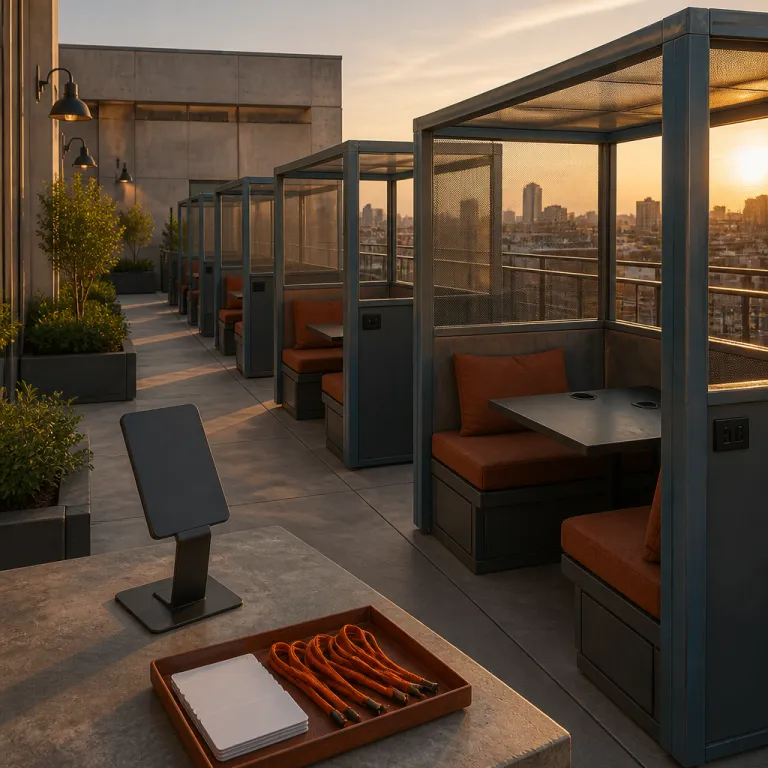
From pool loungers to power outlets: Marriott’s day-pass signal to workspace operators
Marriott International has turned hotel day pass distribution Marriott into a formal revenue channel by naming ResortPass an approved vendor for amenity access. The agreement routes non overnight guests into a standardized pass and checkout flow, where pools, spas, fitness areas and cabanas become bookable inventory rather than idle décor. For revenue leaders eyeing coworking in the hotel lobby or guest room, this is the clearest signal yet that workspace access will follow the same distribution logic.
ResortPass already connects more than 2 700 hotel and spa partners to local demand, and Marriott properties now join that international collection with a unified interface for day pass sales. Skift analysis suggests that if only a fraction of Marriott’s roughly 1,5 million room keys generate ten day-use transactions per week at 50 dollars per pass, the annual upside exceeds 390 million dollars before food and beverage upsell. That scale matters for any company planning to monetise work focused amenities, because once a platform can fill pool loungers it can also fill quiet corners, meeting tables and hybrid working zones.
For operators in markets like Bethesda or other suburban office corridors, the lesson is blunt and actionable. Hotel day pass distribution Marriott is no longer an experiment ; it is a structured channel with clear commission expectations, service standards and data flows. The next logical step is to define how workspace access, from a single guest room office to a full media coworking floor, plugs into the same cart, the same pass logic and the same guest journey.
Pricing workspace like a spa: membership logic, ADR cannibalisation and corporate demand
Once hotel day pass distribution Marriott becomes normalised for leisure amenities, pricing for work oriented passes cannot be improvised. A day pass for a pool is a pure add-on, while a day pass for a guest room office competes directly with day-use ADR and meeting room rental. Revenue and commercial directors need a grid that separates amenity access, semi private working zones and full room control, then assigns minimum rate fences to protect overnight business.
One practical approach is to treat workspace access as a layered collection of entitlements rather than a single product. A basic pass might include lobby seating, Wi-Fi and power, while a premium pass adds a quiet zone, printing, curated food and beverage credit and late checkout aligned with corporate working hours. For companies shifting from traditional offices to hotel based media coworking strategies, benchmarking the real cost of an urban office or virtual office against these layered passes is essential, and detailed analysis is available in this guide on how much an urban or virtual office really costs for hotel based media coworking.
Corporate buyers will not purchase workspace passes the way leisure guests buy a spa day. They will expect bundled memberships, predictable monthly invoices and the ability to manage employee access through a central company dashboard that feels as intuitive as a social feed on Facebook or Instagram. For DRH and real estate directors, the value lies in flexible working capacity near key hubs like Bethesda, while for hotel operators the value lies in repeatable, contracted demand that stabilises occupancy in both physical space and digital booking cart.
Preparing for the aggregator era: distribution stacks, media coworking and social demand signals
Marriott’s ResortPass move shows how fast an approved vendor can become the default layer for hotel day pass distribution Marriott across a global portfolio. Hilton and Accor are already running comparable day access programmes, which means the next aggregator that connects workspace passes, guest room offices and lobby coworking zones will arrive into a market that understands commissions, blackout rules and non guest handling procedures. The strategic question for hotel coworking pioneers is whether to wait for that aggregator or to build a direct distribution stack that sets their own margins first.
Hybrid hospitality brands experimenting with media coworking in hotels should map their full distribution mix before signing any workspace aggregator contract. A robust stack blends direct booking engines, corporate APIs, curated B2B partnerships and specialist day pass platforms, and a detailed framework is outlined in this analysis of how to build a day pass distribution stack before aggregators set your margins. Once workspace access is live on third party shelves, operators will need dynamic pricing tools similar to those already used for spa passes, plus clear rules on when a working guest can extend a pass, upgrade to a room or add food and beverage to the same cart.
Marketing will not be limited to rate parity and meta search, because social channels already shape local demand for day pass experiences. Guests routinely share pool days on Facebook, Instagram and Facebook Twitter, and the same behaviour will apply when they enjoy a beautifully lit lobby desk with strong coffee and reliable service for focused work. As Marriott International and ResortPass roll out their partnership across participating hotels, the most agile properties will treat every day pass guest as a potential member, using each interaction to test workspace layouts, refine access rules and calibrate pricing for the coming wave of workspace aggregators, as explained in the official guidance that states : "Check availability at local Marriott hotels" and "Book day passes via ResortPass".
Tech and operations: building a workspace-ready day-pass engine
Turning hotel day pass distribution Marriott into a sustainable workspace business requires more than a new rate code. Property management systems must recognise non staying guests, assign them digital keys or QR codes for access, and handle incidentals such as food and beverage or printing without forcing a full check in. The operational backbone that now supports pool and spa passes through ResortPass can be extended to coworking zones, but only if hotels define clear access rules, time bands and service levels for working guests.
Tech leads should start by mapping every touchpoint in the day pass journey, from search to checkout. A dedicated booking layer for workspace passes needs to integrate with payment gateways, inventory controls for seats and rooms, and staff task management so that service teams know when a working guest requires support, coffee refills or technical help. Detailed functional requirements for such a platform are outlined in this guide to day pass booking platforms and the must have features hotel tech leaders should secure before procurement.
Operationally, hotels must decide which spaces are bookable as individual workstations and which remain flexible lounge zones. A guest room converted into a day office needs a different cleaning rhythm, minibar policy and noise standard than a traditional overnight room, while lobby coworking areas require clear signage and staff training so that every team member will recognise a workspace pass on sight. As more international brands follow Marriott International into structured day pass partnerships, the properties that align tech, service and pricing around a coherent workspace strategy will be the ones that enjoy durable, high margin revenue from media coworking in hotels.