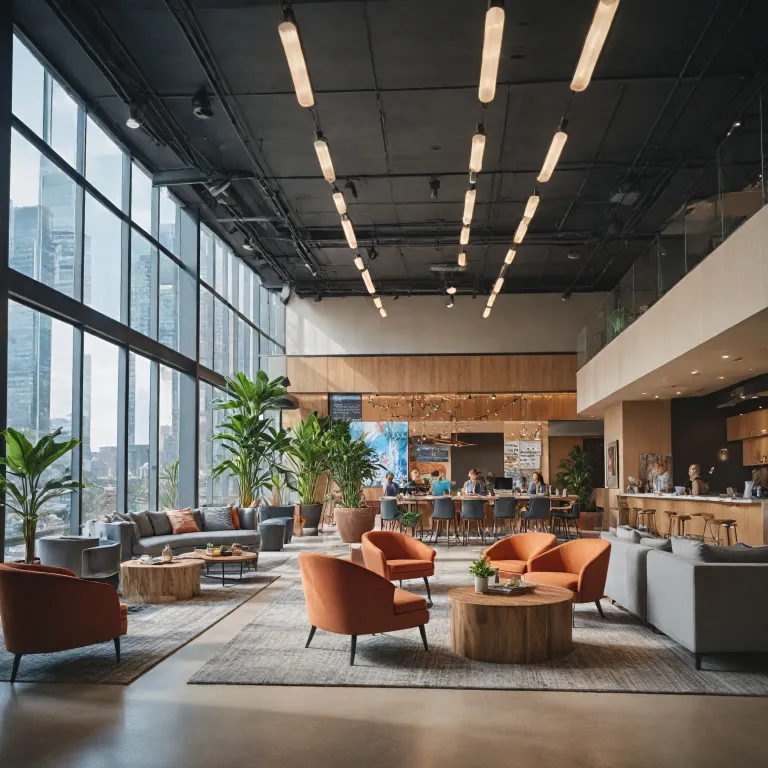
Hotel media coworking as a strategic stage for co working startups
Media coworking in hotels has become a strategic stage for co working startups seeking visibility, flexibility, and proximity to clients. For hotel operators, this hybrid coworking space model transforms underused meeting rooms and lobby areas into revenue generating office spaces while reinforcing the property’s positioning with tech oriented companies. In parallel, asset managers see these shared environments as a way to test new real estate concepts with limited capex and measurable business impact.
The rise of every coworking space worldwide is closely linked to the growth of startups and the demand for flexible office solutions, and hotels are ideally placed to host this movement. Global data show that the co working space market already represents several billion USD, with thousands of coworking spaces operating in the United States alone and a strong pipeline of new flexible workspace projects. Within this context, hotel based coworking spaces offer a differentiated value proposition compared with traditional office buildings, especially for early stage startup teams that travel frequently.
For innovation leaders and corporate real estate directors, hotel coworking spaces provide a living lab to observe how tech startups, scale up companies, and distributed teams actually work. These environments combine private offices, open coworking spaces, and social areas, enabling companies coworking together to prototype new collaboration rituals and media formats. When a hotel brand curates a community of spaces startups and creative professionals, the property becomes more than an office space ; it turns into a convene style hub where business, content production, and hospitality intersect elegantly.
Designing flexible workspace ecosystems inside hotels for media centric work
Transforming a hotel into a media coworking space requires more than placing desks in a meeting room. Operators must orchestrate a flexible workspace ecosystem that supports focused work, content creation, and social interaction for both a single startup and multiple startups. This means combining quiet office spaces, acoustically treated podcast studios, and informal social media corners where teams can shoot short format content without disturbing guests.
From a design perspective, the most successful coworking spaces in hotels treat the lobby as a stage for business storytelling. Lighting, sound, and furniture layouts are configured so that tech startups can host product demos, investor meetings, or press briefings without compromising the guest experience. In this configuration, the hotel becomes an industrious yet welcoming environment where every square metre of office space contributes to both revenue and brand equity.
Innovation managers should also consider how digital layers support this physical coworking space. Smart IoT devices and AI based desk booking systems allow members to reserve private offices, meeting rooms, or content studios in real time, mirroring the best practices of top coworking operators in san francisco or new york city. By integrating these tools into the hotel’s website and app, the property can offer a seamless flexible office journey that appeals to companies coworking across multiple locations in the united states and beyond.
Operating models that align hotel P&L with co working startups needs
For hotel owners and asset managers, the key question is how to align the P&L with the expectations of co working startups and mature companies. Several operating models exist, ranging from fully managed coworking spaces run by specialized partners like WeWork or Ucommune to hotel led concepts that integrate coworking space operations into the existing management structure. Each model has implications for risk sharing, brand control, and the ability to curate a relevant mix of tech startups and creative business users.
Revenue strategies should combine recurring membership fees, pay per use office space bookings, and premium services such as media production support or curated social events. When a hotel offers flexible office passes, day use private offices, and long term office spaces on the same floor, it can serve early stage startup teams, remote employees from large companies, and independent professionals simultaneously. This diversified demand base stabilizes occupancy and reduces reliance on traditional meeting and events business.
Human resources directors and corporate real estate leaders increasingly look for flexible workspace solutions that support hybrid work policies while maintaining a strong company culture. Hotel coworking spaces can host regular team days, offsites, and training sessions, allowing employees who started coworking during remote work periods to reconnect in person. By positioning the property as a coworking top choice for regional teams, operators tap into a new layer of demand that complements transient accommodation and F&B revenue.
Curating communities and media programs inside hotel coworking spaces
The true value of hotel based coworking spaces lies in the community and media programs that animate them. A simple flexible office product rarely suffices for demanding tech startups and content driven companies that expect networking, learning, and visibility opportunities. Here, the hotel can act as a convene style curator, programming events that bring together startup founders, investors, and corporate innovation teams on a regular basis.
Community managers should design a calendar that turns the coworking space into a recognizable stage for the local innovation ecosystem. Breakfast briefings, podcast recordings in the lobby, and live social media sessions can all be integrated into the hotel’s operations without disrupting guests. When companies coworking on site are invited to share their stories, the property gains authentic content that can be amplified through its website, owned channels, and partners’ platforms.
One Roof Women illustrates how a focused community strategy can differentiate a coworking space by supporting a specific audience of women entrepreneurs. Hotel operators can adapt this logic by targeting particular verticals such as media, gaming, or impact tech startups, creating spaces startups clusters that reinforce the property’s positioning. Over time, this approach can transform the hotel into a coworking top destination for a given sector, attracting both local members and international visitors who value a familiar, media friendly office space when traveling.
Integrating hotel coworking into corporate mobility and real estate strategies
For corporate clients, hotel coworking spaces are increasingly integrated into broader mobility and real estate strategies. Instead of leasing large traditional office spaces, companies can rely on a network of flexible workspace locations, including hotels, to support distributed teams and project based work. This approach reduces long term real estate commitments while giving employees access to professional office space wherever they travel.
Directors of real estate and HR can negotiate frameworks that combine accommodation, meeting rooms, and coworking space access into a single agreement. In markets like san francisco or new york city, where office space costs are high, such arrangements can be particularly attractive for early stage tech startups and fast growing companies. By using hotel coworking spaces as satellites around a smaller headquarters, a company maintains presence in key business districts without bearing the full cost of permanent office spaces.
Hospitality leaders who want to position their properties as serious players in this flexible office ecosystem should study best practices from established providers and specialized platforms. Resources such as hotel coworking membership options redefining workspace flexibility for hospitality leaders offer detailed insights into membership structures, pricing, and service design. When combined with data from social media, booking systems, and corporate feedback, these learnings help refine the coworking space offer so that it remains competitive with top coworking brands in the united states and other mature markets.
Measuring performance and de risking investment in hotel media coworking
To convince investors and asset managers, hotel based media coworking initiatives must be supported by robust performance measurement. Key indicators include occupancy of coworking spaces, revenue per square metre of office space, ancillary F&B spend from members, and the number of companies coworking on site over time. Tracking the mix of startups, scale ups, and established business clients also helps refine the positioning and pricing strategy.
Industry data show that the global coworking space market already exceeds ten billion USD in value, with thousands of coworking spaces operating in the united states and a significant share of businesses achieving profitability. These benchmarks provide a useful reference when modelling scenarios for hotel coworking spaces in urban markets such as san francisco or new york city. By comparing performance with peers like WeWork, Ucommune, and other flexible office operators, hotel owners can calibrate expectations and adjust their offer accordingly.
Risk can be further reduced by phasing the rollout of coworking spaces within a property or portfolio. Many operators started coworking with a limited number of private offices and shared desks, then expanded as demand from tech startups and other companies materialized. As one industry definition reminds us, “A co-working space is a shared office environment where individuals from different companies or freelancers work together in a communal setting.” This clarity helps stakeholders align on the scope of the project and avoid confusing coworking with traditional business centers or simple lobby seating.
Global benchmarks and future directions for hotel based coworking spaces
Looking at global benchmarks, the most successful coworking spaces share several characteristics that hotel operators can emulate. They provide a mix of private offices, open coworking spaces, and event areas, all supported by strong digital infrastructure and community management. They also maintain a clear focus on specific user segments, whether early stage tech startups, creative companies, or remote teams from larger business organizations.
In innovation hubs like san francisco, brands such as Rocket Space have shown how a curated environment for tech startups can attract both local founders and international companies seeking a soft landing. Hotel based coworking spaces can adapt this model by offering residency programs, media support, and flexible office memberships tailored to startups that travel frequently between cities such as san francisco and new york city. By positioning the property as a bridge between different ecosystems, operators create additional value for members and strengthen their own brand.
As the number of coworking spaces continues to grow globally, differentiation will depend on the ability to integrate hospitality, media, and flexible workspace into a coherent experience. Hotel operators who invest in high quality design, reliable technology, and meaningful social programming will stand out among top coworking options in their markets. Ultimately, the goal is to create hotel coworking spaces where work, content creation, and community life coexist naturally, offering startups and established companies a compelling alternative to conventional office spaces.
Key statistics on coworking and flexible office growth
- Global coworking space market value recently estimated at approximately 10.81 billion USD.
- Projected global coworking space market value expected to reach around 36.92 billion USD in the coming years.
- Number of coworking spaces in the United States reported at about 6,200 locations.
- Roughly 30 % of coworking businesses were identified as profitable in the most recent data set.
Frequently asked questions about coworking spaces in hotels
What is a co-working space?
A co-working space is a shared office environment where individuals from different companies or freelancers work together in a communal setting. In the context of hotels, this shared environment is integrated into the property’s public or semi private areas. Members benefit from professional services while enjoying the amenities and atmosphere of hospitality venues.
Why are co-working spaces popular among startups?
Co-working spaces are popular among startups because they provide flexibility, cost efficiency, and immediate access to a professional office space without long leases. These environments also foster networking, mentorship, and collaboration opportunities that are vital for early stage ventures. When located in hotels, they additionally offer convenient accommodation and meeting facilities for traveling founders and teams.
What amenities do co-working spaces typically offer?
Most coworking spaces offer high speed internet, ergonomic desks, and access to meeting rooms equipped with audiovisual technology. Many also provide communal lounges, phone booths, event areas, and sometimes wellness or F&B services. Hotel based coworking spaces can extend this list with room service, concierge support, and on site restaurants or bars.
How should companies choose a hotel coworking space for their teams?
Companies should evaluate location, transport access, and the quality of office spaces and meeting rooms. They also need to assess community fit, technology infrastructure, and the flexibility of membership options relative to their growth plans. Finally, decision makers should compare total cost of occupancy, including accommodation and F&B, with traditional office leases.
What role do technology and digital tools play in hotel coworking?
Technology underpins the entire flexible workspace experience in hotels, from online booking platforms to AI based desk allocation. Digital tools enable seamless access control, billing, and community engagement through apps and social media channels. For operators, these systems provide data to optimize layouts, staffing, and pricing across coworking spaces and private offices.