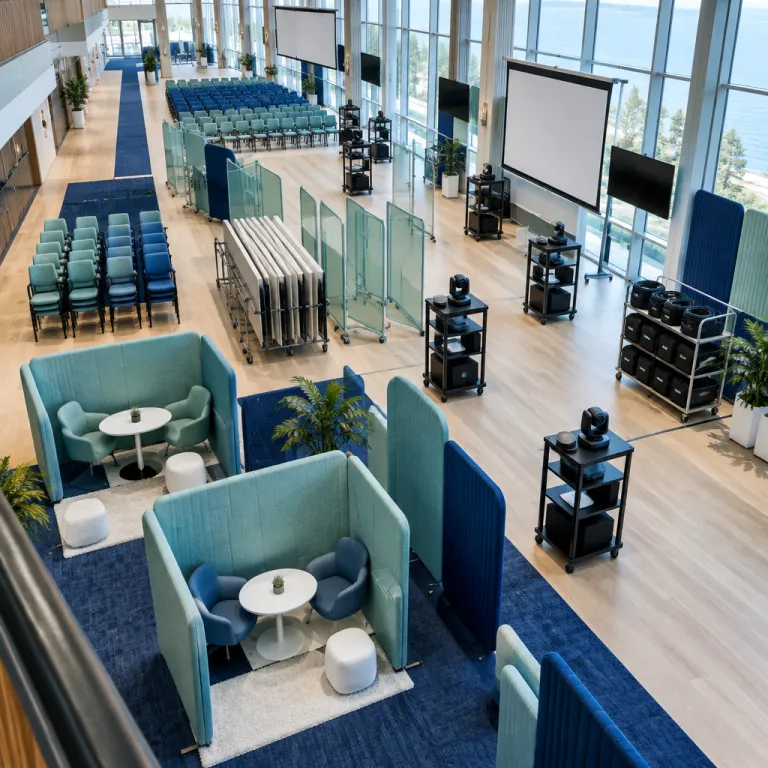
From classic hotel to hybrid media coworking hub
Nacka Stadshotell shows how a traditional hotel can evolve into a hybrid media coworking hub without losing its character. For operators in Stockholm and Malmö, the question is no longer whether to mix coworking with meetings and events, but how to orchestrate meeting and event capacity so that every square metre works all day. This shift affects daily operations, from how a single room is cleaned to how conference facilities are priced, staffed, and equipped for media use.
The property benefits from being centrally located in Nacka, within easy reach of central Stockholm by bus or boat, while still close to the Stockholm archipelago and its quieter pace. Hotel guests who arrive for a conference in the city often extend their stay to work remotely, which means hotel rooms must feel comfortable enough for overnight stays yet also function as workspaces modern enough for video calls and content creation. Asset managers and hotel real estate teams see this dual use as a way to raise the yield of every room and every corridor, especially when meetings and coworking activities are programmed across the full day.
For coworking operators and innovation leaders, the key operational question is how to align media production, coworking, and conference guests in the same building without friction. At Nacka Stadshotell, the meeting and event floors sit directly adjacent to the lobby and restaurant, which simplifies wayfinding for people who arrive for short meetings or longer productions. This layout also supports a fluid experience where a conference room can host a podcast in the morning, a hybrid meeting at midday, and a local community event in the evening, all while preserving a calm atmosphere for hotel guests on upper floors. As the hotel’s operations manager notes, “On a typical weekday we now host three to four different formats in the same room, yet guest satisfaction scores have remained above 8.5 out of 10.”
Designing meeting and event spaces for flexible capacity
Managing meeting and event space capacity starts with design choices that anticipate multiple uses in the same day. A single conference room must be able to shift from a board meeting of 10 people to a media training session for 30, then to a coworking breakout zone, without long reset times. For hotel operators, this means investing in modular furniture, acoustic treatments, and lighting that can support both live events and on-camera recording.
The hotel offers a mix of conference rooms and smaller meeting rooms that can be combined or separated, which gives conference guests and corporate users more options. When hotel rooms on lower floors are equipped with proper desks, ergonomic chairs, and strong sound insulation, they can serve as overflow rooms modern enough for private calls during large conferences. This approach allows the hotel to stretch its conference facilities beyond the classic meeting floor and to monetise capacity that would otherwise sit idle during the working day; at Nacka Stadshotell, this has contributed to an estimated 6 to 8 percent uplift in weekday RevPAR compared with pre-coworking levels.
Daily operations teams need clear playbooks for these transformations, especially when coworking and media activities overlap with traditional events. A best practice is to define capacity bands for each room and to link them to specific layouts, cleaning times, and technical setups, then to integrate these bands into the booking engine and the revenue management system. For example, a 40-square-metre room might be capped at 12 people in boardroom style, 24 in classroom layout, and 30 in theatre format, with 15 to 20 minutes scheduled between each changeover for housekeeping and AV checks. For a deeper operational perspective on how flexible event suites and coworking media spaces influence staffing, scheduling, and guest experience, many hotel directors now study detailed case analyses and then adapt those learnings to the scale and layout of Nacka Stadshotell.
Integrating coworking media uses into hotel daily operations
When media coworking enters a hotel, the daily rhythm of the property changes significantly. At Nacka Stadshotell, capacity is no longer measured only in chairs and square metres, but also in how many content creators, remote teams, and local companies can use the building in parallel. This requires close coordination between front office, housekeeping, F&B, and technical teams so that each meeting, recording, or live stream runs smoothly.
For HR leaders in user companies, the appeal lies in offering employees a comfortable, well serviced alternative to the corporate office, especially for hybrid meetings. Staff who work from hotel coworking spaces will find reliable Wi-Fi, quiet rooms modern enough for focused work, and access to a restaurant offer that feels more premium than a typical canteen. When hotel offers include day passes that bundle a dedicated room, coffee breaks, and access to a spa or gym, they support employee wellbeing while also driving incremental revenue for the hotel; at Nacka Stadshotell, typical day-office packages start around SEK 600–800 per person, depending on season and inclusions.
Operationally, this means rethinking service sequences across the day. Housekeeping may need to clean certain hotel rooms twice daily to accommodate both overnight guests and daytime coworkers, while conference facilities must be checked between each rotation of conference guests. Event planners also need to coordinate with F&B so that the restaurant can handle both à la carte service and pre-booked meetings with coffee and snacks, which is where insights from event formats that turn hotel coworkers into regulars become operationally valuable and help teams plan staffing levels, prep lists, and service flows.
Food, beverage, and coffee as anchors for coworking and meetings
Food and beverage operations sit at the heart of any media coworking strategy in a hotel. At Nacka Stadshotell, the restaurant and lobby bar are not just amenities for hotel guests, but anchors that support meeting and event capacity throughout the day. When the restaurant offer is calibrated for both quick lunches and longer client meetings, it becomes a natural extension of the meeting and coworking floors.
For conference guests, the ability to walk the hotel from room to restaurant in a short walk without going outside is a tangible advantage in the Nordic climate. A centrally located coffee station directly adjacent to the main conference rooms reduces pressure on the bar and allows people to self-serve during breaks, which keeps the flow of meetings on time. When coffee, tea, and filtered water are included free of charge in day delegate packages, planners can budget more easily and the hotel can forecast F&B volumes with greater precision.
Operators who want to push the concept further often look at how minimalist hotels and poshtels have turned cafés into membership-based workspaces. Case studies such as the one on a poshtel that transforms its café into a funded workspace show how a strong coffee culture can underpin recurring coworking revenue. For Nacka Stadshotell, similar principles apply: the restaurant can host breakfast for hotel guests, then pivot to a quiet coworking café before lunch, and finally become a lively venue for evening events linked to the hotel’s media and conference calendar, with themed dinners or after-work gatherings that encourage repeat visits from local members.
Location, guest flows, and the Stockholm archipelago context
Nacka Stadshotell benefits from a location that bridges central Stockholm and the Stockholm archipelago, which shapes how its spaces are used. Conference guests who arrive from the city appreciate that the hotel is within easy reach of Slussen and central Stockholm, while still offering a calmer environment and, in some rooms, a partial view of Stockholm and the water. For asset managers, this dual identity supports a positioning that combines urban convenience with a softer archipelago atmosphere.
The surrounding area includes historic buildings and waterfront promenades, which influence how people move between the hotel and the neighbourhood. Many guests will find that they can take a short walk from the lobby to nearby cafés, parks, or ferry terminals, then return for afternoon meetings or spa appointments. When the hotel integrates these flows into its programming, it can schedule early morning meetings for city-based clients, midday coworking for local residents, and late afternoon wellness sessions in the spa for hotel guests and external members.
For companies based in Malmö or other Swedish cities, Nacka Stadshotell can serve as a hub for regional meetings that combine work and leisure. Teams can use conference rooms for strategy sessions, then extend their stay to explore the Stockholm archipelago over the weekend, which increases occupancy and F&B spend. This blend of business and leisure, often called bleisure, is particularly powerful when meeting and event capacity is managed to accommodate both weekday corporate demand and weekend leisure events without operational strain.
Pricing, rules of the day, and capacity governance
To make media coworking sustainable in a hotel environment, pricing and governance must be as carefully designed as the physical spaces. At Nacka Stadshotell, meeting and event capacity can be translated into a clear set of rules for the day that define when rooms are available for overnight stays, when they can be sold as day offices, and when they can host recordings or small meetings. This clarity helps front office teams avoid overbooking and gives revenue managers a framework for dynamic pricing.
Conference facilities can be priced in tiers that reflect not only the size of the room, but also the technical equipment, acoustic quality, and media support included. A small room with high-end microphones and lighting can command a premium from content creators, even if it hosts fewer people than a standard meeting room. For HR and corporate real estate leaders, subscription models that bundle a set number of meeting credits, coworking passes, and hotel rooms per month can offer predictable costs while giving employees flexibility across the day.
Governance also extends to how spaces are reserved for hotel guests versus external users. Some centrally located rooms modern enough for both uses may be blocked for hotel guests during peak tourism periods, then released to conference guests and coworkers during shoulder seasons. Clear communication of these rules, both on the website and at the front desk, ensures that people know what they can book, when they can book it, and what the hotel offers in terms of added services such as spa access or restaurant vouchers. A concise call-to-action on booking pages that highlights “day office”, “podcast studio”, and “hybrid meeting” options helps guests choose the right product and improves conversion.
Key statistics on hotel coworking and meeting space performance
- According to STR’s “Hotel Performance Outlook for Europe 2023–2024” (published June 2023), hotels that add flexible meeting and coworking products can increase ancillary revenue per available room by 5 to 10 percent, especially in urban markets like Stockholm where corporate demand is diversified.
- Data from JLL’s “Future of Work Survey 2022” indicates that hybrid work has reduced traditional office occupancy by around 30 percent in many European cities, which pushes companies to use hotel conference rooms and coworking spaces more frequently for project-based meetings.
- Research by CBRE in its “Global Flexible Office Market Outlook 2023” shows that flexible space, including coworking and serviced offices, is expected to represent up to 30 percent of some corporate real estate portfolios, creating sustained demand for hotel-based meeting and coworking solutions.
- Surveys from the Global Business Travel Association, including the “GBTA Business Travel Index Outlook 2023–2027”, highlight that more than half of business travellers now combine work trips with leisure stays, which increases the value of hotels that can manage meeting capacity alongside spa, restaurant, and leisure offers.
FAQ about media coworking and meeting capacity at Nacka Stadshotell
How can Nacka Stadshotell balance hotel guests and coworking users in daily operations ?
The key is to segment floors and time slots so that overnight hotel guests occupy quieter levels, while coworking and media activities concentrate near the lobby and conference floors. Clear rules for the day, combined with smart scheduling of cleaning and technical checks, allow the same room to serve different uses without disturbing guests. Communication at check-in and in pre-arrival emails helps set expectations for both segments.
What types of companies benefit most from using Nacka Stadshotell for meetings and coworking ?
Companies with hybrid work models, project-based teams, or distributed staff across Stockholm, Malmö, and other Swedish cities gain the most value. They can use conference rooms for strategy sessions, then let employees work individually from hotel rooms or coworking areas. Media, tech, consulting, and creative industries particularly appreciate the combination of reliable infrastructure and a relaxed archipelago-inspired setting.
How should pricing be structured for meeting rooms and coworking passes ?
Pricing works best when it reflects both time of day and level of equipment. Day delegate rates can bundle a meeting room, coffee breaks, and lunch, while hourly rates suit shorter sessions or podcast recordings. Subscription models for frequent users, such as local companies or freelancers, can stabilise demand and improve forecasting of meeting and event capacity.
What operational changes are required to support media production in hotel spaces ?
Hotels need stronger Wi-Fi, better sound insulation, and flexible lighting in selected rooms, along with staff trained to handle basic AV setups. Housekeeping schedules must adapt to protect sensitive equipment and avoid noise during recordings. Clear booking rules and technical checklists reduce last-minute issues and protect the guest experience in adjacent rooms.
How does the location near the Stockholm archipelago influence meeting and coworking demand ?
The proximity to both central Stockholm and the Stockholm archipelago makes Nacka Stadshotell attractive for retreats, strategy offsites, and bleisure stays. Teams can work intensively in conference facilities, then unwind with waterfront walks or boat trips. This combination encourages longer stays and higher F&B spend, which supports the business case for investing in flexible meeting and coworking capacity.
Sources
- STR – “Hotel Performance Outlook for Europe 2023–2024”, June 2023.
- JLL – “Future of Work Survey 2022: The Workplace and Hybrid Work in Europe”.
- CBRE – “Global Flexible Office Market Outlook 2023”.
- Global Business Travel Association – “GBTA Business Travel Index Outlook 2023–2027”.