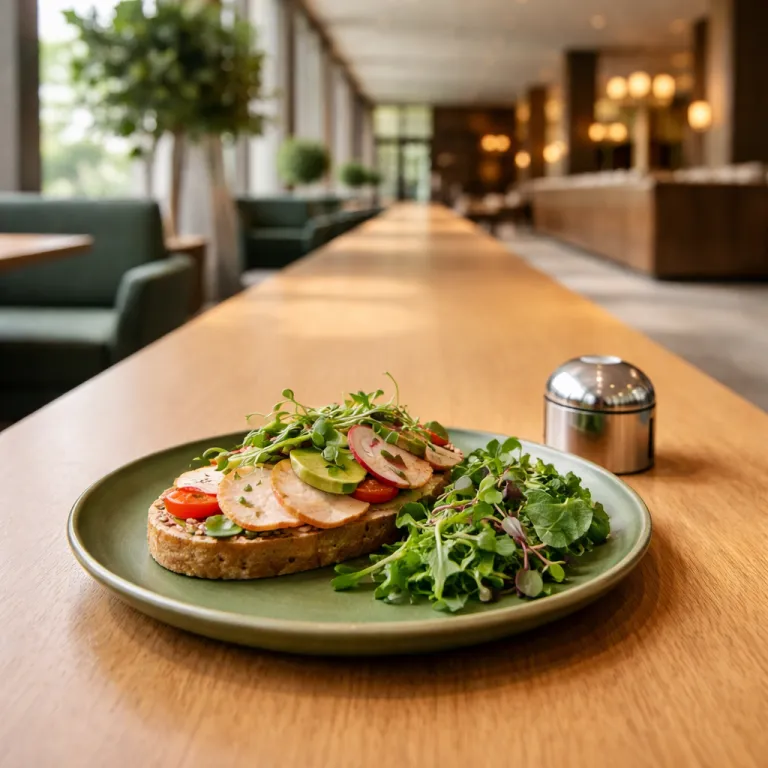
From hotel lobby food and beverage coworking concept to revenue engine
Hybrid hospitality only works when the hotel lobby food and beverage coworking model treats every occupied seat as a billable micro tenancy. In that frame, the best performing hotel is not the one with the highest day pass price, but the one where the lobby offers a steady cadence of coffee, lunch and snacks that quietly multiplies revenue per occupied hour. For exploitants hôteliers and asset directors, the question is simple yet unforgiving: does each square metre of lobby space feel like a productive work lounge or like an underused transit zone.
Economic benchmarks across hospitality show that ancillary spend can lift total guest value by 15 to 40 percent when bundled effectively, and lobby F&B is the most controllable ancillary lever in a hotel lobby food and beverage coworking strategy. Industry analyses from STR and McKinsey, for example, highlight that properties with strong non-room revenue programmes consistently outperform on total RevPAR, especially when food and beverage is integrated with workspace and meeting offers. STR’s 2023 Hotel Performance Outlook and McKinsey’s 2022 report on “Hospitality and the future of work” both underline that hotels with diversified non-room revenue streams, including lobby cafés and flexible work lounges, post higher total revenue per available room than peers with similar occupancy.
When those lobbies work properly, a guest may arrive for two hours of quiet work sessions, catch emails over excellent coffee, then stay through happy hour because the space feel is calibrated for both productivity and social energy. Operators in dense city locations such as Midtown or the Lower East Side of a major New York City market already understand that the lobby is their most visible address and their most flexible space. The same logic applies whether you are running a high hotel tower in NYC, a boutique Marlton-style property in Greenwich Village, or a regional business hotel in another city: the lobby lounge is your front line for work oriented F&B.
The hotel lobby that treats day workers as a core segment, not a side hustle, becomes the best hotel in its micro market for repeat local spend rather than just transient room revenue. At the Ace Hotel New York, for instance, the lobby café and bar famously evolved into an all-day workspace and social hub, with regulars using the space as their default office and driving a disproportionate share of daily coffee, snack and evening bar revenue compared with in-house guests alone. Publicly available interviews with the Ace Hotel team and coverage in outlets such as The New York Times and Condé Nast Traveler describe how the lobby’s mix of long tables, strong coffee and evening cocktails turned it into a neighbourhood office, with local guests returning several times a week.
Designing the lobby as a working café: zoning, seating and sensory control
Design and space planning are where hotel lobby food and beverage coworking either becomes a dream scenario for revenue or a daily operational headache. A lobby that aspires to be the best work spot in its city needs clear zoning between circulation, social lounge, quiet work and café service, or the result is acoustic chaos and frustrated guests. For hotel general managers and directions immobilières, the design brief should start with the metrics of revenue per available seat hour rather than with abstract décor ideas.
In practice, that means mapping how different lobbies work across the day: where do guests naturally gravitate for quick coffee, where do they open laptops for longer work sessions, and where does a cocktail lounge atmosphere make sense after 17:00. Leather chairs and deep sofas can anchor the social lounge, while slimmer communal tables with integrated power serve as the work zone, making ideal use of every metre without feeling like a traditional office. Ventilation and olfactory control are non negotiable, because the food cannot smell like the lobby for eight hours if you want people to stay and work in that space.
Many of the most effective hybrid lobbies borrow cues from the Ace Hotel and similar pioneers in New York City, where the lobby café and bar operate as a single continuous experience from morning coffee to late night happy hour. At Ace, for example, the same long tables host laptop users in the afternoon and cocktail groups in the evening, with lighting and music doing most of the transition work. Whether you are in Midtown, the East Side or Greenwich Village, the principle is the same: the lobby offers a coherent journey from espresso bar to cocktail lounge without ever pushing laptop users out.
For asset managers evaluating a portfolio of hotel lobbies, a practical way to benchmark potential is to walk the space at three times of day and ask whether each zone could support paid work sessions with minimal retrofit. A simple checklist might include power access at every second seat, at least one quiet zone with soft finishes for acoustic control, and a clear line of sight to service points. From there, a dedicated business space to let in media coworking hotels guide can help refine the layout and address specific coworking operator needs.
The day pass F&B model: separate menu, separate rhythm, shared kitchen
The core economic insight of hotel lobby food and beverage coworking is that the first ancillary revenue line is F&B, not the desk fee. A day worker occupying a seat for six hours will typically generate two to four coffee moments, one substantial meal and one afternoon snack, which is a far more predictable pattern than classic transient hotel guest behaviour. If your lobby café only sells one overpriced sandwich and a generic coffee during that window, you are effectively renting prime space at coworking operator prices.
Hybrid hotels that outperform their peers treat day workers as a distinct F&B segment with its own menu, price point and service rhythm, even though the same kitchen and bar produce the food. The working lunch offer must be ready at noon sharp, not 12:45, because office workers and entreprises utilisatrices run on meeting schedules, not on leisure time, and they will not wait in a lobby line. Snack programming around the 15:00 dip is equally strategic: a bowl on the counter with high margin impulse snacks can quietly fund the cost of the desk while the guest catches emails and orders a final coffee before leaving.
Operational tools such as F&B analytics software and the RevPASH metric help hotel F&B managers understand which lobby seats and which time slots generate the best revenue per occupied hour. A practical target for a busy urban lobby might be to move from €3–€5 per available seat hour in off-peak periods to €8–€12 during core coworking windows, with attach rates above 80 percent between desk use and at least one paid F&B item. Mobile F&B carts and grab and go fridges can convert underused corners of the lobby into profitable micro cafés, especially in larger hotel lobbies where the main bar is too far from some work zones.
For properties experimenting with long stay nomad packages and extended work sessions, aligning the day pass F&B model with broader hybrid hospitality offers is essential. A zoning the work lobby design guide can help ensure that circulation, acoustics and service points all support that higher intensity use, while a one page operating plan clarifies prep times, menu rotation and staffing for the day worker segment.
Espresso bar economics, snack strategy and the mistake of discounting
Most hotel coffee is still not good enough to anchor a serious hotel lobby food and beverage coworking community, and that is a missed margin opportunity. A properly specified espresso bar with trained baristas, reliable equipment and a clear workflow can achieve very high gross margins per cup, especially when paired with simple viennoiseries and grab and go items that require minimal kitchen labour. The payback period on a high quality coffee setup is often measured in months, not years, when the lobby attracts regulars who treat it as their daily café and informal office.
The common mistake is to start with a discounted menu for day workers, as if lower prices alone would drive loyalty, when in reality a higher value menu prints more money by increasing average spend per occupied hour. A focused offer of premium coffee, a few best in class sandwiches, one hot dish of the day and a curated set of afternoon snacks gives guests clear choices without overwhelming the kitchen, and it aligns with the predictable cadence of work sessions. In practice, operators can aim for an average ticket of €10–€15 per three hour stay during the day, rising to €20–€25 when the same guest stays through early evening and orders a drink and light bites.
When the lobby offers a credible cocktail lounge transition in the early evening, with a short happy hour window and light bites, many day workers will stay longer, invite colleagues and effectively convert into bar guests without changing seats. Snack strategy is where subtle design meets behavioural economics: placing healthy and indulgent options at eye level near the communal tables nudges incremental purchases as people catch emails between meetings. Mobile F&B carts can circulate through the lobby during peak work periods, bringing fresh air energy and a café on wheels feeling to zones that are far from the main bar.
For operators in dense New York or NYC markets, where every address competes with multiple street cafés, this layered approach to coffee, snacks and cocktails is what turns the lobby into the best spot for both productivity and social connection. A simple staffing rule of thumb is one barista per 30–40 active seats during the morning rush, with cross trained team members able to pivot between espresso, snacks and light prep as the day evolves.
KPI dashboard, ESG levers and the human layer of retention
To manage hotel lobby food and beverage coworking as a serious business line, general managers need a clear KPI dashboard that goes beyond daily cover counts. Revenue per occupied hour, attach rate between desk use and F&B spend, repeat day worker share and the ratio of F&B revenue to any desk fee are the core indicators that show whether the lobby is functioning as a profitable hybrid workspace. When those numbers are tracked by zone within the lobby, asset managers can see which lobbies work hardest and which corners remain under monetised.
Concrete targets help teams act: many urban hotels aim for at least 70 percent of day pass users to purchase two or more F&B items, with repeat local guests representing 30 to 40 percent of weekday lobby revenue. ESG expectations from corporate clients and DRH teams mean that low waste lunch programmes, refillable cup deposits and locally sourced grab and go cans are no longer nice to have features but selection criteria. A menu that minimises food waste through modular components, such as bases and toppings that can be recombined across salads and bowls, supports both sustainability goals and margin protection.
Ventilation and acoustic treatments that keep the air clear and the noise controlled are equally part of the ESG story, because they protect staff wellbeing and make the space feel healthy for long work sessions. The human layer is where F&B becomes the relationship engine of the lobby: the staff member who remembers a regular’s coffee order or preferred room in the lounge area often drives more retention than any booking platform. For hotel F&B managers, training teams to recognise regular day workers, offer a quick greeting and suggest relevant items at the right moment is a low cost, high impact tactic.
As one industry explanation puts it, “What is RevPASH? Revenue per available seat hour; measures revenue efficiency per seat per hour.” That metric only reaches its potential when every interaction in the lobby, from coffee to cocktail, is designed to extend both the duration and the value of each occupied seat. A one page checklist that combines RevPASH targets by daypart, attach rate goals, menu timing checkpoints and ESG commitments gives operators a practical tool to review performance weekly and adjust the hybrid lobby offer in real time.
FAQ
How does RevPASH apply to lobby coworking spaces in hotels ?
RevPASH, or revenue per available seat hour, measures how much revenue each seat generates for every hour it is available. In a hotel lobby food and beverage coworking context, it helps managers compare the performance of different zones, such as the café bar, communal tables or lounge seating. Tracking RevPASH by time of day and by area allows operators to adjust menus, staffing and pricing to maximise revenue per occupied hour.
Why should hotels focus on lobby F&B services for day workers ?
Lobby F&B services convert underused public space into a high margin revenue centre that serves both hotel guests and external day workers. Day pass users follow a predictable pattern of coffee, lunch and snacks, which creates stable ancillary revenue when the offer is well designed. Strong lobby F&B also enhances the overall guest experience, supporting higher satisfaction scores and better retention of local regulars.
What operational changes are needed to serve working lunches effectively ?
Serving working lunches to day workers requires aligning kitchen prep windows with office style schedules, which means having food ready exactly at noon. Hotels often need a simplified, dedicated lunch menu that can be executed quickly without disrupting room service or banqueting. Grab and go options, pre batched items and clear pickup points in the lobby reduce wait times and keep work sessions uninterrupted.
How do mobile F&B carts impact lobby revenue in coworking setups ?
Mobile F&B carts allow hotels to bring coffee, snacks and light meals directly to high demand work zones within the lobby. This approach converts circulation areas or quiet corners into active revenue generators without major construction or new fixed bars. By meeting guests where they sit, carts increase impulse purchases and improve RevPASH across the entire lobby floor.
What ESG practices make sense for lobby coworking F&B operations ?
Low waste lunch programmes, refillable cup schemes and locally sourced grab and go items are practical ESG levers for lobby coworking F&B. These practices reduce food waste, cut packaging and support local suppliers while still protecting margins. Communicating these initiatives clearly to corporate clients and regulars strengthens the hotel’s positioning as a responsible hybrid workspace partner.