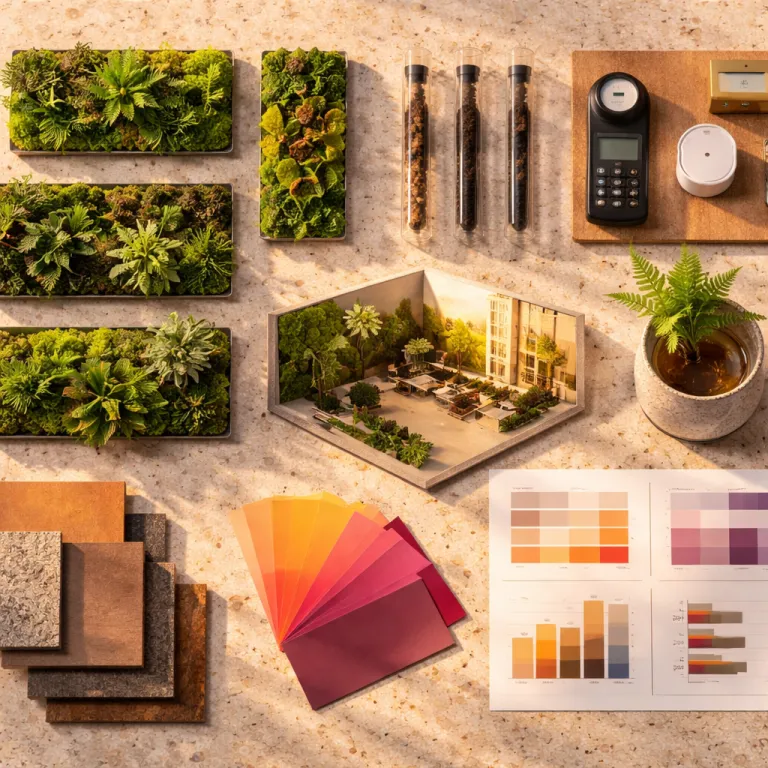
From decorative greenery to biophilic hotel workspace design strategy
Hotel lobbies that double as a workplace are no longer about decorative plants. For a general manager defending a refurbishment budget, biophilic hotel workspace design now sits alongside RevPAR and F&B KPIs because it links nature, stress reduction, and measurable productivity. The shift is clear when a lobby table with strong natural light, reliable office power, and a quiet interior space outperforms a traditional business centre with no green elements.
Researchers tracking biophilia in the built environment have moved beyond mood surveys to harder data. A frequently cited synthesis by Browning, Ryan and Clancy (2014, 14 Patterns of Biophilic Design, Terrapin Bright Green, pp. 10–15) reports productivity gains of up to 15% in workplaces that integrate biophilic design elements such as indoor plants, daylight, and natural materials, while a review by Terrapin Bright Green (2012, The Economics of Biophilia, pp. 18–25) associates nature-rich office environments with double-digit reductions in absenteeism. These consolidated findings give asset managers a language to compare a green office lobby investment with a new PMS module or an extra meeting room, without relying on a single, potentially unrepresentative study.
In this context, hotel coworking spaces become a live laboratory for biophilic interior strategies. Designers, employees, and researchers now collaborate to test how specific patterns of planting, water features, and timber finishes influence attention span and perceived workplace comfort. The objective is not a generic modern office aesthetic, but a biophilic office interior that keeps day workers in the lobby spaces longer, spending more at the bar while feeling well and focused.
Daylight first: where biophilic design meets lobby zoning economics
Walk any lobby during peak coworking hours and you will see the daylight map. Seats near windows, where natural light and a clear connection to nature space are strongest, fill first, while interior office space zones with poor indoor light and no plants office presence stay empty. This behavioural pattern is consistent with coworking research that shows day workers self selecting for window seats in every modern office environment.
For hotel general managers, this means biophilic hotel workspace design must start with glazing, orientation, and glare control rather than ornamental plants. A well planned office interior layout that aligns desks with east or north facing windows, uses sheer blinds to manage glare, and adds reflective interior design surfaces can outperform a costly plant wall in perceived comfort and reduced stress. When you then layer in a clear zoning strategy, as detailed in this practical guide to zoning the work lobby for concentration, collaboration, and calls, the lobby becomes a high performing workplace rather than a noisy café.
Designers now use lighting analysis tools to model how natural light moves through lobby spaces across the day. They combine this data with biophilic design strategies, such as placing indoor plants and office plants where daylight supports growth, and using darker, more intimate office biophilic corners for focus work with warm artificial light. The result is an interior environment where biophilic interior elements, from plants to water features, are not decorative extras but core components of a design office plan that drives dwell time and green office revenue.
Plant walls, indoor plants and the real cost of green lobby maintenance
Plant walls have become the poster child of biophilic office design in hotels, but their economics are often misunderstood. A lush vertical garden behind the check in desk may photograph well, yet if it is not integrated into the office space where guests actually work, the workplace benefit is limited. For a GM, the question is not whether plants look natural and green, but whether the biophilic elements are positioned where laptops, coffee cups, and meetings actually happen.
There are two main ownership models for large scale indoor plants installations in lobby coworking spaces. Some properties manage plants office maintenance in house, investing in horticulture training, irrigation systems, and sensor based monitoring of the indoor environment, while others use subscription services that supply, replace, and care for plants and water features on a fixed monthly fee. The second model can stabilise operating costs and reduce the risk of the dreaded plant graveyard, where failing biophilic interior features undermine the design biophilic narrative and signal neglect to guests.
Families using hotel coworking areas during bleisure stays add another layer of complexity. When children share nature space zones with remote workers, plant selection, soil containment, and water feature safety become part of the interior design brief, as explored in this analysis of how family first bleisure reshapes hotel product design. Successful biophilic hotel workspace design therefore balances robust, low maintenance plants with clear circulation patterns, ensuring that green office features support both productivity and family friendly use without increasing stress for staff.
Materials, acoustics and the invisible side of biophilic office interiors
Beyond plants, the material palette of a lobby workplace quietly shapes how guests feel and behave. Timber, stone, and natural fibres introduce tactile biophilic elements that soften the built environment, while also contributing to ESG reporting through traceable supply chains. When these materials are combined with thoughtful office design, the result is a biophilic office interior that feels calm, grounded, and aligned with a brand’s long term sustainability narrative.
Acoustics are where many hotel coworking spaces fail, even when the visual design biophilic language is strong. Large volumes of plants and vertical green walls can absorb some frequencies but also create uneven reverberation if they are not coordinated with ceiling treatments, rugs, and furniture layouts in each office space zone. Designers now use architectural design software to simulate how sound moves through interior spaces, then position indoor plants, soft seating, and water features to support quiet focus areas while allowing a livelier café style workplace environment near the bar.
For asset managers, these material and acoustic decisions are not aesthetic luxuries. Natural finishes often age better than synthetic ones, reducing lifecycle costs, while a well tuned acoustic strategy can increase dwell time and F&B spend in biophilic hotel workspace design. When guests can take calls without raising their voice, work near a subtle connection to nature, and feel physically well in the indoor climate, they are more likely to return, recommend the property, and justify premium pricing for office interior day passes.
ROI, wellness data and how to brief your design office
To secure investment, general managers need a clear ROI story for biophilic hotel workspace design. Internal benchmarks already show that multifunctional public spaces with strong zoning strategies and biophilic design elements can generate significantly more non room revenue than traditional lobbies focused only on check in. When you add external data on productivity and health, the case for a biophilic office lobby becomes even stronger.
Researchers summarise the core mechanism simply : "What is biophilic design? Design incorporating natural elements to improve well-being." They also state : "How does biophilic design affect productivity? It enhances cognitive function and reduces stress, boosting productivity." Finally, they clarify : "What are common biophilic design elements? Plant walls, natural light, and organic materials." These statements, combined with quantified gains in productivity and reduced sick days, give hotel teams a credible framework to brief architects, interior designers, and wellness consultants.
One European city hotel that converted a traditional marble lobby into a biophilic coworking lounge illustrates the commercial impact. Before refurbishment, average dwell time was 42 minutes with F&B revenue of €6.80 per seated guest; twelve months after introducing daylight aligned workstations, indoor planting, acoustic zoning, and ergonomic seating, dwell time rose to 68 minutes and F&B revenue reached €10.40 per guest, while day pass sales increased by 27%. When you next commission a design office for a lobby refurbishment, the brief should therefore specify measurable targets. As a starting template, define (1) performance goals such as a 20–30 % increase in average dwell time and a 10–15 % uplift in F&B revenue per occupied coworking seat, (2) evidence requirements including a daylight analysis that maps natural light levels across all potential workplace spaces, a planting plan that aligns indoor plants with maintenance capacity, and an acoustic model that integrates biophilic elements with sound control, and (3) a measurement plan that tracks pre and post refurbishment data on dwell time, F&B attach rate, day pass sales, and guest feedback. Then link these design biophilic decisions to commercial KPIs such as the photography premium that a green office lobby commands on booking platforms, supported by ergonomic seating insights from this guide to elevating coworking experiences through hotel chair design.
FAQ
How does biophilic hotel workspace design reduce stress for day workers ?
Biophilic hotel workspace design reduces stress by integrating nature based elements such as natural light, indoor plants, and water features into the lobby workplace. These features support lower cortisol levels, improved attention, and a calmer perception of the indoor environment. When combined with good acoustics and ergonomic office furniture, they create spaces where guests feel physically and mentally well while working.
Where should a hotel start if the lobby has limited natural light ?
Hotels with poor natural light should begin with a detailed lighting and layout analysis. Designers can reorient office space zones toward existing windows, use reflective interior surfaces, and specify high quality artificial lighting that mimics daylight patterns. Strategic placement of plants and light coloured materials then reinforces the connection to nature even in deeper interior spaces.
Are plant walls always the best biophilic investment for a lobby coworking area ?
Plant walls are visually powerful but not always the most effective or economical biophilic intervention. In many cases, a mix of well maintained indoor plants at desk height, natural materials, and improved daylight control delivers better workplace outcomes. The right choice depends on maintenance capacity, ceiling height, and how closely the green elements align with actual work zones.
How can asset managers measure the ROI of biophilic lobby workspaces ?
Asset managers can track ROI by monitoring dwell time, F&B revenue per seat, day pass sales, and repeat usage of lobby coworking spaces before and after biophilic upgrades. They can also survey perceived productivity and comfort among guests using the office interior zones. When these metrics move in parallel with improved online reviews and stronger visual content, the financial impact of biophilic design becomes clear.
What operational risks come with biophilic office interiors in hotels ?
The main operational risks include inconsistent plant maintenance, water damage from irrigation or water features, and cleaning complexity around dense planting. These risks can be mitigated through clear maintenance protocols, choosing robust plant species, and, where appropriate, using subscription based plant services. A realistic maintenance plan is as important as the initial design when creating durable biophilic hotel workspaces.