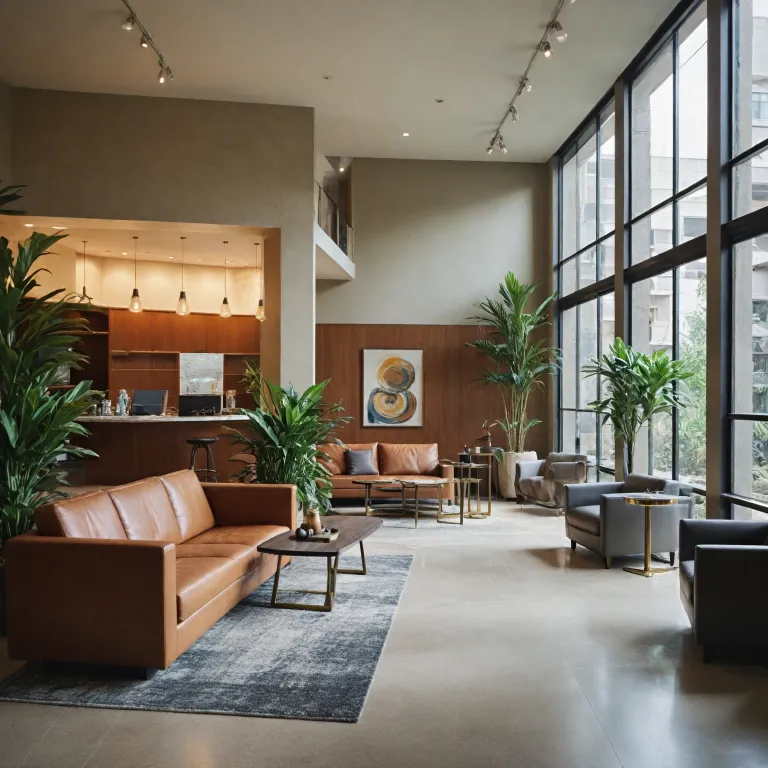
Media coworking in hotels as the new frontier of flexible hospitality
Media coworking in hotels is emerging as a strategic response to shifting workspace expectations and the latest coworking news november 2025. For hotel owners and asset managers, the convergence of coworking, space optimization, and hospitality services is no longer a side experiment but a core lever for growth and risk diversification. As the coworking industry matures, hotels are becoming fully equipped hubs where flexible workspace, content creation, and hybrid work intersect in a single operational model.
The market context is clear ; national office vacancy has climbed while demand for flexible office and flex space keeps rising in key urban centers. Coworking operators such as Networkia in Madrid or Switchyards in Houston illustrate how coworking spaces can be integrated into mixed use assets, and hotels are ideally positioned to follow this trajectory. When hotel lobbies, meeting rooms, and underused conference floors are reimagined as coworking spaces, they become revenue generating office space that also strengthens guest loyalty and local community engagement.
For innovation leaders and corporate real estate teams, media coworking in hotels offers a flexible workspace alternative that supports hybrid work and remote work policies without long leases. Companies can secure a coworking space or several coworking spaces for project teams, while employees benefit from professional work life settings close to transport and amenities. This model aligns with coworking news november 2025, where the focus is on adaptable workspace, curated services, and the ability to scale office needs up or down within the same year.
From empty meeting rooms to monetised flex space ecosystems
Hotel operators often sit on significant volumes of underused meeting rooms and banquet halls that can be transformed into profitable flex office ecosystems. By repositioning these areas as coworking space and flex space, hotels tap into the coworking industry’s growth while enhancing their core hospitality offer. This shift is particularly relevant in gateway cities such as london, New York, and san francisco, where traditional office markets face structural change but demand for flexible office solutions remains strong.
In practice, converting a floor into coworking spaces requires more than adding desks and Wi-Fi ; it means designing a flexible workspace that supports hybrid work, media production, and informal collaboration. Operators must consider roughly feet allocations per workstation, acoustic treatment for content creation, and circulation patterns that respect both hotel guests and coworking users. For hotels wishing to support community initiatives, dedicating part of this office space as free space for nonprofits in New York City or other markets can reinforce brand purpose while feeding future business pipelines.
Asset directors and space operators should also evaluate membership models that blend day passes, monthly coworking space subscriptions, and corporate packages for enterprises. These offers can be promoted through a daily newsletter that shares programming, events, and curated insights about coworking news november 2025 and the broader coworking market. When hotels position themselves as local hubs for work, workspace innovation, and social impact, they create new reasons for companies to read their content and maintain long term relationships.
Designing media ready coworking spaces inside hotels
Media coworking in hotels differs from standard coworking because it must support intensive content production alongside everyday work. A successful coworking space in this context combines quiet offices, semi open flexible workspace, and dedicated studios where teams can record podcasts, webinars, or video interviews. These coworking spaces must be fully equipped with soundproof booths, lighting rigs, and high bandwidth connectivity, while still feeling aligned with the hotel’s brand and guest experience.
For DRH and corporate real estate leaders, such a flexible office environment enables hybrid work policies that include on site collaboration days focused on media and communication projects. Teams can work from home for part of the week, then regroup in a hotel coworking space to script, film, and edit content in a single workflow. This approach reflects coworking news november 2025, where companies seek workspace that supports both knowledge work and storytelling, turning office space into a strategic communication asset rather than a fixed cost.
Hotel innovation managers should partner with specialized coworking operators or media agencies to design these spaces and manage community programming. Integrating booking platforms, access control, and analytics helps track space utilization, work life patterns, and ROI on real estate investments. For a deeper operational perspective, many executives now study how media coworking in hotels creates an optimised workflow that aligns staffing, F&B, and meeting services with coworking industry demand.
Global benchmarks from london, north america, and spanish operators
International benchmarks are essential for hotel owners evaluating media coworking strategies in light of coworking news november 2025. In london, the flex office and flex space market has become a reference for integrating coworking into heritage buildings, often in partnership with experienced coworking operators. These projects show how flexible workspace can coexist with hospitality, retail, and cultural venues, creating vibrant mixed use ecosystems that extend work life beyond traditional office hours.
In north america, cities such as san francisco, Houston, and New York illustrate how coworking spaces can anchor neighborhood regeneration while supporting remote work and hybrid work patterns. Operators like Switchyards, which runs a 24/7 coworking club model, demonstrate the potential for hotel lobbies and lounges to evolve into round the clock workspace and social hubs. Meanwhile, Spanish operator Networkia has expanded coworking space portfolios in Madrid and Barcelona, proving that fully equipped flexible office environments can thrive in both central business districts and secondary locations.
For hotel asset managers, these examples highlight the importance of aligning coworking space design, services, and pricing with local market dynamics. A year company entering london may prioritize premium offices and private office space, while a regional firm in north america might favor open coworking spaces and meeting rooms priced per roughly feet used. Strategic partnerships with space operators allow hotels to share risk, access coworking industry expertise, and benefit from established daily newsletter channels that share insights and drive occupancy.
Operational models and partnerships for hotel based coworking
Choosing the right operational model is critical for hotels entering media coworking while staying aligned with coworking news november 2025. Some brands opt for a management agreement with established coworking operators, who run the coworking spaces and flex space while the hotel focuses on rooms, F&B, and events. Others create their own flexible workspace brand, integrating coworking, office space, and meeting services under a single hospitality led identity.
For directeurs d’actifs and directions immobilières, the decision hinges on risk appetite, available expertise, and the maturity of the local coworking market. Partnering with experienced space operators can accelerate ramp up, ensure that coworking space layouts meet professional standards, and provide access to corporate sales channels. In parallel, hotels can leverage their own databases to promote flexible office offers, hybrid work packages, and remote work retreats to existing business clients.
HR leaders and entreprises utilisatrices increasingly value coworking spaces in hotels as tools for employer branding and talent retention. Curated programming, from media training to networking events, can be promoted through a daily newsletter that employees actually want to read and share. As one industry analysis notes, “The rise of hybrid work models and the need for flexible, community-oriented work environments are key drivers.” This quote encapsulates why flexible workspace in hotels resonates with both the coworking industry and the broader office market.
Measuring performance and future directions for media coworking in hotels
To justify investment, hotel owners must measure the performance of media coworking initiatives with the same rigor applied to rooms and F&B. Key indicators include coworking space occupancy, revenue per roughly feet, ancillary spend on F&B, and the impact on overall office space utilization within the asset. Tracking how many corporate clients adopt hybrid work packages or flexible office subscriptions over a year provides additional insight into long term demand.
Digital analytics also play a role, especially when hotels publish regular content and a daily newsletter about coworking news november 2025 and local workspace trends. Metrics such as open rates, time spent to read articles, and social media share volumes help gauge the resonance of insights with target audiences. Over time, this content strategy positions the hotel as an authority on coworking, flexible workspace, and work life innovation, attracting both coworking operators and enterprise clients.
Looking ahead, media coworking in hotels is likely to expand beyond major hubs like london, san francisco, and north america’s coastal cities into secondary markets. As real estate portfolios adapt to structural shifts in the office market, hotels can offer fully equipped coworking spaces and flex office solutions that de risk long leases for companies. For leaders seeking a deeper strategic view, analyses of how hotel careers are being reshaped by media coworking provide valuable insights into future skills, staffing models, and cross functional collaboration between hospitality and the coworking industry.
Key statistics shaping media coworking in hotels
- Coworking space openings reached approximately 22 million square feet in the period, underscoring the scale of new flexible workspace supply.
- The year over year increase in coworking spaces was measured at 16 percent, confirming sustained growth in the coworking industry.
- The national office vacancy rate stood at 18.5 percent, highlighting why many landlords and hotels are pivoting toward flex office and coworking space models.
Frequently asked questions about media coworking in hotels
What is driving the growth of coworking spaces in 2025?
The rise of hybrid work models and the need for flexible, community oriented work environments are key drivers behind the expansion of coworking spaces. Companies are rethinking long term office leases and turning to flexible office and flex space solutions that can scale with business cycles. Hotels, with their existing infrastructure and service culture, are natural partners in this coworking industry evolution.
Which cities are seeing significant coworking space expansions?
Cities such as New York, Houston, and Madrid are experiencing notable growth in coworking spaces, alongside established hubs like london and san francisco. These markets combine dense corporate demand, strong startup ecosystems, and high office vacancy, which favors flexible workspace models. For hotel owners in these cities, integrating coworking space into their assets can capture new revenue streams and support local work life ecosystems.
How are coworking spaces adapting to the needs of tech startups?
Coworking spaces are adapting to tech startups by offering tailored environments with modern amenities and networking opportunities specific to the tech industry. This includes fully equipped meeting rooms, high performance connectivity, and access to mentors or investors through curated events. Media coworking in hotels adds another layer, providing content studios and flexible office space that support both product development and communication strategies.
How should companies choose between traditional offices and flexible workspace in hotels?
Companies should assess their headcount volatility, hybrid work policies, and capital constraints when choosing between traditional offices and flexible workspace in hotels. If teams fluctuate in size or rely heavily on remote work, coworking space and flex office solutions in hotels can reduce long term commitments. Additionally, hotels offer bundled services, from catering to accommodation, which can enhance employee experience during intensive project sprints.
What operational risks should hotel owners consider before launching coworking spaces?
Hotel owners must evaluate demand volatility, competition from existing coworking operators, and the complexity of running a workspace community alongside traditional hospitality. Careful market analysis, clear zoning between guest areas and coworking spaces, and robust digital tools for access and billing are essential. Many hotels mitigate these risks by partnering with experienced space operators who understand the coworking industry and can manage daily operations effectively.