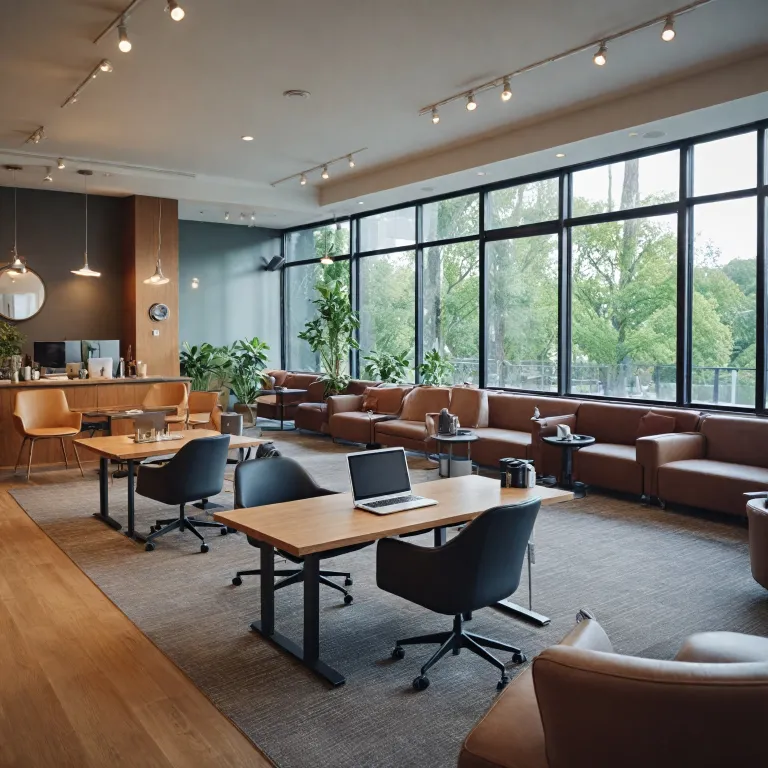
Flex workspace news and the rise of media coworking in hotels
Media coworking in hotels has moved from experiment to strategic pillar for the workspace sector. As flex workspace news highlights shifting patterns of hybrid work, hotel owners and operators now reassess every square metre of office space and public area. This shift turns underused lounges into productive coworking space that attracts new business guests.
Behind the headlines, data from flexible workspace marketplaces shows a structural change in market demand. The Instant Group reports that the average requirement size for flexible workspace in North America increased by 32 percent, while demand for flexible workspaces in the U.S. and Canada rose by 19 percent. These figures confirm that flexible office and coworking space are no longer marginal options but central to commercial real estate strategies.
For exploitants hôteliers and asset directors, this flex workspace news translates into concrete decisions about space allocation and working office design. Hybrid work has blurred the boundary between office and hospitality, encouraging flexible work patterns that extend beyond traditional office spaces. Hotels that integrate a professional workspace or media coworking center can capture this growth while reinforcing guest loyalty.
Operators such as InfinitSpace and Vallist illustrate how flexible offices can be embedded within existing commercial real estate assets. InfinitSpace opened its largest flexible workspace location in London, while Vallist launched its first flexible workspace location in the same city. Their expansion underlines how hotel based coworking spaces can plug into a broader workspace market and attract enterprise clients seeking cost effective, centrally located working environments.
Designing hotel media coworking spaces for hybrid work
Designing media coworking in hotels requires more than adding desks and meeting rooms. Flex workspace news repeatedly shows that users expect a flexible workspace that supports content creation, video calls, and collaborative work in equal measure. This means acoustic zoning, robust connectivity, and ergonomic office furniture must be treated as core elements, not optional extras.
Hybrid work has created new expectations around work life balance and the quality of every workspace. Guests want a coworking space that feels as professional as a corporate office space, yet as welcoming as a hotel lounge. To achieve this, operators must curate different spaces within the same location, from quiet working office zones to informal media corners and bookable meeting rooms.
For hotel owners, the workspace market now rewards properties that can flex between leisure and business modes. A flexible office or coworking space can be opened to external members during the day, then reconfigured for events in the evening. This flexible work approach maximizes revenue per square metre and aligns with the broader growth of the workspace sector highlighted in global flex workspace news.
Technical infrastructure is equally critical, especially for media focused coworking spaces. Reliable upload speeds, sound treated podcast booths, and adaptable lighting transform a generic office into a true media coworking center. When these elements are integrated with hotel services such as catering and concierge, the result is a differentiated flexible workspace that appeals to both travelling professionals and local companies.
Business models, operators and revenue sharing in hotel coworking
The most significant flex workspace news for hotel stakeholders concerns evolving business models and partnerships. Traditional leases are giving way to management agreements and revenue sharing structures between commercial real estate owners and flexible workspace operators. This shift allows hotels to access specialist expertise while limiting long term risk on office spaces.
According to recent analyses, establishing management agreements with property owners and adopting revenue sharing models aligns incentives between landlords and operators. Commercial landlords increasingly partner with operators such as InfinitSpace and Vallist to activate underused space and respond to rising market demand. For hotels, similar partnerships can transform a dormant conference floor into a vibrant coworking space and media production hub.
WeWork and other flexible office providers have shown how surveys and workplace data can guide these strategies. By analyzing workspace market trends, they help hotel owners understand which mix of flexible offices, meeting rooms, and open coworking areas will attract enterprise clients. This data driven approach ensures that each working office or flexible workspace is tailored to local demand rather than generic templates.
For operators, hotel based coworking offers access to prime location assets without heavy upfront capital expenditure. They can plug their brand, technology, and news team style community management into an existing hospitality infrastructure. In return, hotels gain a differentiated business center, improved occupancy across the day, and a stronger position in flex workspace news cycles that influence corporate real estate decisions.
Media coworking as a talent and corporate real estate strategy
For DRH and corporate real estate directors, media coworking in hotels is no longer only about space optimization. Flex workspace news increasingly frames flexible workspace as a lever for talent attraction, retention, and organizational culture. WeWork notes that office spaces play a key role in business profitability and culture, reinforcing the strategic value of well designed work environments.
Hybrid work policies have pushed companies to rethink where and how employees work. Instead of committing solely to long term office space, many organizations now combine a smaller headquarters with access to flexible offices and hotel based coworking spaces. This portfolio approach offers employees more choice of location while reducing overall occupancy costs and improving work life balance.
Media coworking spaces in hotels are particularly attractive for teams in communications, marketing, and content production. They provide a professional workspace with on demand meeting rooms, studio style corners, and reliable technology, all within a high quality hospitality setting. For travelling staff, the ability to work, sleep, and meet clients in a single location reduces friction and supports productivity.
From a commercial real estate perspective, this trend supports the growth of the workspace sector and diversifies demand beyond traditional office markets. Companies can use data from flexible workspace platforms to track utilization, employee satisfaction, and cost effective outcomes across different spaces. As these metrics feed back into corporate strategies, hotel based coworking appears more frequently in internal post project reviews and external flex workspace news coverage.
Operational excellence, wellness and air quality in hotel coworking
Operational excellence is essential if hotel based coworking spaces are to compete with dedicated flexible workspace centers. Guests and external members expect a working office that delivers consistent service, reliable technology, and a calm atmosphere. Flex workspace news also highlights growing attention to wellness, indoor air quality, and acoustic comfort in every type of workspace.
For exploitants hôteliers, this means aligning coworking operations with existing hotel standards while adapting to office user expectations. Clear service level agreements with operators, well trained staff, and proactive maintenance routines are crucial. Resources such as practical strategies to enhance air quality in hotel lobbies and coworking media spaces provide actionable guidance on ventilation, filtration, and monitoring.
Wellness focused design can differentiate a flexible workspace in a crowded workspace market. Natural light, biophilic elements, and quiet zones support concentration, while ergonomic furniture and healthy food options reinforce a positive work life experience. Meeting rooms equipped with high quality audiovisual systems and good acoustics enable hybrid work meetings that feel seamless for both in person and remote participants.
Cost effective operations do not mean cutting corners on user experience. Instead, hotels and operators can use data on occupancy, booking patterns, and ancillary spend to refine their mix of office space, coworking space, and event areas. By adjusting staffing, opening hours, and membership structures, they can maintain profitability while remaining competitive in the latest news about flexible work and the broader workspace sector.
Future flex workspace news trends for media coworking in hotels
Looking ahead, flex workspace news suggests that hotel based media coworking will become more integrated into global workspace networks. Flexible workspace platforms already aggregate office spaces, coworking space options, and meeting rooms across multiple cities. As demand grows, hotels can position their properties as premium nodes within these networks, especially in central business districts and transport hubs.
In regions such as North America, India, and Singapore, rising demand for flexible workspaces indicates sustained growth potential. Flexible workspace supply in India has expanded rapidly, while Singapore has recorded steady year over year increases in flexible workspace demand. These trends signal opportunities for hotels to collaborate with operators and workplace group style brands to activate underused space.
Technology will further blur the line between office and hospitality. Booking platforms will allow users to reserve a working office, coworking desk, or meeting room in a hotel as easily as a guest room. Integrated access control, data analytics, and community apps will help operators and hotel teams coordinate services, communicate news, and manage flexible offices efficiently.
For asset managers and innovation leaders, the key will be to treat media coworking as a core component of commercial real estate strategy rather than a side project. By aligning design, operations, and partnerships with the evolving workspace market, hotels can secure a durable role in the flexible office ecosystem. In doing so, they will feature prominently in future flex workspace news as case studies of how hospitality and work can successfully converge.
Key statistics shaping flexible workspace and hotel coworking
- Average requirement size for flexible workspace in North America increased by 32 percent compared with the previous period.
- Flexible workspace supply in India reached approximately 58 million square metres by the middle of the period.
- Demand for flexible workspaces in the U.S. and Canada rose by 19 percent over the same timeframe.
- Singapore recorded a 5 percent year over year increase in flexible workspace demand, indicating steady regional growth.
- New operators such as Vallist and expanding brands like InfinitSpace have launched major flexible workspace locations in London, signalling continued investment in the sector.
Frequently asked questions about media coworking in hotels
What is driving the growth of flexible workspaces in hotels ?
What is driving the growth of flexible workspaces? The shift towards hybrid work models and evolving business needs have increased the demand for flexible and adaptable office spaces. Hotels are well positioned to respond because they already manage high quality spaces, services, and central locations that can be adapted into coworking and media production environments.
Which regions show the strongest demand for flexible workspace ?
Which regions are experiencing significant growth in flexible workspace demand? Regions such as North America, India, and Singapore have seen notable increases in flexible workspace demand. These markets provide useful benchmarks for hotel owners and operators considering media coworking concepts in similarly dynamic urban locations.
What recent developments are shaping the flexible workspace market ?
What are some recent developments in the flexible workspace market? Recent developments include the launch of new flexible workspace operators like Vallist and the expansion of existing operators like InfinitSpace into larger locations. Their activity demonstrates investor confidence in flexible offices and highlights partnership opportunities for hotels seeking to reposition underused areas.
How do management agreements support hotel coworking projects ?
Establishing management agreements with property owners allows specialist operators to run coworking and flexible workspace centers inside hotels while sharing revenue. This structure reduces long term risk for owners and ensures that workspace operations benefit from professional expertise, technology platforms, and established news team style community management.
Why is hybrid work important for hotel based coworking strategies ?
Hybrid work has changed how and where employees expect to work, increasing the appeal of flexible workspace options close to transport and amenities. Hotel based coworking responds to this demand by offering professional office space, meeting rooms, and media friendly environments that integrate seamlessly with accommodation and hospitality services.
References
- The Instant Group – Flexible workspace market reports and data
- WeWork – Workplace insights and surveys on office space and culture
- InfinitSpace – Flexible workspace operator partnerships with commercial landlords