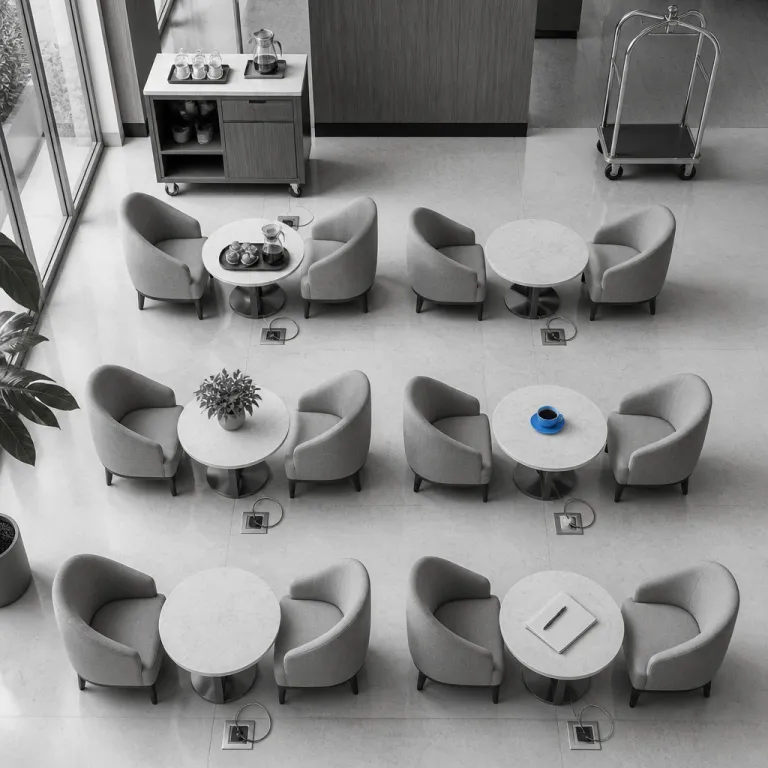
Why most hotel lobbies act like upgraded offices, not true third places
From Oldenburg’s theory to the hotel lobby reality
Ray Oldenburg defined the third place as a social environment separate from home and work. In his framework, genuine third places are informal spaces where status dissolves, regulars shape the atmosphere, and the primary activity is social connection rather than individual work. By that diagnostic standard, most hotel lobby “third space” work concepts are actually upgraded second spaces: they function as alternative offices with hospitality service, not as neighbourhood clubs or civic hangouts.
For exploitants hôteliers and asset directors, this confusion matters because it blurs the economic logic of lobby investments. A lobby that behaves like a better office or workplace, rather than a true third place, will generate different ancillary revenue patterns, different dwell times, and different expectations from workers who arrive with laptops and noise cancelling headphones. When you call these environments third spaces but programme them as premium second spaces, you misalign space design, staffing, and pricing with the actual work being done.
Across portfolios, we see lobbies positioned as flexible spaces where guests can work, meet, and socialise, yet the operational metrics still track like a traditional office lounge. Guests and local workers use these places as extensions of their primary workplace, not as community clubs, and they judge them on Wi‑Fi reliability, furniture ergonomics, and coffee quality. The result is a workplace third offer in everything but name, a work‑focused lobby that competes with cafés and coworking spaces rather than with neighbourhood bars or civic third places.
Oldenburg’s own definition remains a useful diagnostic tool for hotel executives. When asked, “What is a 'third place' ?” his answer is clear : “A social environment separate from home and work.” That means most hotel lobby third space workspace concept executions are, at best, effective third approximations that still feel like curated office spaces with better lighting and more social signalling.
Studies show that only a minority of lobbies meet full third place criteria, even when they are explicitly designed as third spaces. Industry research summarised in recent concept analyses indicates that while a majority of hotels have redesigned their public spaces, only a smaller share of these spaces help build recurring community behaviour. For example, an internal 2023 review of 40 urban hotels across France and Germany found that only 11 properties generated repeat local visits more than twice a week from the same guests, a basic proxy for third place regulars. The gap between the marketing promise of third places and the operational reality of second spaces with coffee is where value is currently leaking.
For media, coworking operators, and innovation leaders, this is not a semantic debate about third space versus second space. It is a strategic question about which environments you are actually building, which workers you are serving, and which revenue model you are optimising for. If the lobby is primarily a work‑oriented environment where employees feel they can focus, then the design ancillary decisions, from furniture to acoustics, must follow that logic rather than a vague aspiration to host social third spaces that never quite materialise.
Why most hotel lobbies behave like upgraded offices, not third places
Walk into a typical lifestyle hotel lobby at 09:30 on a Tuesday and you will not find a third place in Oldenburg’s sense. You will find workers hunched over laptops, headphones on, coffee cups within reach, and a quiet etiquette that mirrors the traditional office more than a social club. The hotel lobby third space workspace concept has been implemented as a workplace third, a second space with better coffee and softer furniture.
Three structural factors keep most lobbies from becoming genuine third places. First, access is financially gated through room rates, expensive coffee, or day passes, which raises the barrier for local community members who might otherwise become regulars. Second, the social environments are status coded through design choices, where space design, finishes, and branded furniture signal a curated audience rather than an open community, which undermines the social levelling that third spaces require.
Third, the guest mix is transient, with few people returning often enough to form the stable community that defines third places. Even in hotels that court local workers with day passes and lobby memberships, the dominant behaviour remains individual working rather than collective socialising. These spaces designed for laptop work function as ancillary office environments, where spaces people use are optimised for productivity metrics, not for the messy, slow process of building a neighbourhood community.
The Hoxton portfolio is often cited as the closest hotel example to a third place. Its lobbies are explicitly designed as open spaces where anyone can sit, work, or meet without a purchase requirement, and the furniture layout encourages lingering rather than quick turnover. Yet even there, the implicit entry ticket is coffee spend, and the social contract feels more like a shared workplace than a civic third space where regulars know each other’s names.
For coworking operators partnering with hotels, this misalignment can be costly. When you brand a lobby as a third space but sell it as a flexible office, you confuse both workers and local community members about what behaviour is expected. A clearer frame, such as the workspitality approach analysed in resources on retiring the coworking label in hotel public spaces, helps reposition these places as premium work environments with hospitality service, not as ersatz community centres.
From an HR and corporate real estate perspective, companies buying lobby passes for employees are not looking for third places. They are seeking work settings that help employees feel focused, safe, and supported while working away from the headquarters. For them, the hotel lobby third space workspace concept is valuable precisely because it offers a controlled, well serviced alternative to the traditional office, not because it replicates the social dynamics of a neighbourhood café.
Hospitality executives should therefore stop chasing the third space label as a badge of cultural relevance. The more honest and commercially sound ambition is to build environments where spaces feel calm, where spaces help knowledge workers feel productive, and where ancillary revenue from coffee, food, and meeting rooms is a by product of excellent workplace design. That is not a failure to create third places ; it is a deliberate choice to own the upgraded office niche.
Designing for deep work instead of generic community vibes
If most hotel lobbies are, in practice, second spaces, then the design brief must shift from community theatre to serious workplace design. The hotel lobby third space workspace concept should prioritise deep work, reliable comfort, and clear zoning over Instagram friendly social backdrops. For VP level decision makers, this means treating the lobby as a revenue generating space workplace, not as a decorative living room.
Start with zoning and acoustic strategy rather than with furniture catalogues. Effective third environments for work separate concentration zones, informal meeting places, and social coffee areas through layout, materials, and micro signals, so that spaces people can instantly read where to take a call or where to sink into focused working. Detailed guidance on zoning the work lobby, such as the frameworks shared in practical work lobby zoning guides, is more valuable than any moodboard of generic third spaces.
Furniture selection should follow the logic of a high performance workplace third rather than a lounge. That means ergonomic chairs at the right height for laptop work, tables with integrated power, and lighting that keeps workers alert across several hours, so that employees feel physically supported and can genuinely feel productive. Sofas and low coffee tables still have a role, but as ancillary seating in social third areas, not as the default for people who need to work on spreadsheets for three hours.
Biophilic space design has emerged as a powerful lever in these environments. Research on hotel lobby design shows that workspaces with natural light, plants, and warm materials see longer dwell times, which in turn drive higher ancillary spend on coffee, snacks, and light meals. When spaces designed for deep work also feel human and calm, spaces help workers stay longer, and the lobby becomes an effective third option between home and the traditional office.
For long stay guests and digital nomads, the lobby is often the primary workplace, not just a casual third place. Hotel groups that win the thirty plus night segment, as analysed in resources on long stay nomad packages, tend to pair in room comfort with serious lobby workspaces. They understand that these workers choose properties where the space workplace mix lets them move between focused working, quick social interactions, and restorative breaks without leaving the building.
Innovation leaders should also rethink ancillary programming in these spaces. Instead of forcing community events that mimic coworking culture, focus on services that support individual working, such as tech support, quiet hours, or pre booked micro offices that complement the open lobby. When spaces feel intentionally designed for the realities of knowledge work, rather than for vague social buzz, they attract retain both transient guests and local workers who value a predictable, high quality workplace.
Operational models that monetise the lobby as a premium second space
Once you accept that the lobby is a premium second space, the commercial model becomes clearer. The hotel lobby third space workspace concept can be monetised through a mix of day passes, memberships, bundled corporate contracts, and ancillary sales, all calibrated to the value of a reliable space workplace. For asset managers and directions immobilières, this reframing turns a cost centre into a measurable workplace product.
Pricing should reflect the fact that you are selling an upgraded traditional office experience with hospitality service, not access to a vague third place. Workers pay for guaranteed seating, strong Wi‑Fi, quiet environments, and high quality coffee, and they will pay more when spaces feel intentionally designed for these outcomes. Transparent packages that include a defined number of hours, coffee credits, and meeting room access help employees feel that the offer is a serious workplace third alternative, not a casual café.
Partnerships with coworking operators can extend this logic without diluting the hotel’s brand. Instead of outsourcing the entire lobby to a coworking label, structure agreements where the operator manages specific work zones, while the hotel retains control over social third areas and F&B, so that ancillary revenue remains aligned with the core business. Clear zoning between space third work areas and more relaxed third spaces also reduces friction between laptop workers and leisure guests.
Operationally, staff training is as important as space design. Teams must understand that these spaces help workers perform critical tasks, so service behaviours should minimise interruptions in concentration zones while remaining warm and attentive in social places. When employees feel that the lobby is a legitimate workplace, not an afterthought, they are more likely to use it regularly and to recommend it to colleagues.
Data from concept analyses and guest surveys already show the direction of travel. A significant share of guests now use lobbies for work, and hotels that have enhanced lobby designs report higher utilisation of these spaces throughout the day, which translates into more consistent ancillary revenue. In one 2022 pilot across 12 city hotels, for instance, introducing dedicated focus zones and reservable work tables increased average lobby seat utilisation from 32 % to 47 % on weekdays, while lobby F&B revenue per occupied room rose by 14 %. At the same time, studies indicate that only a smaller portion of lobbies truly function as third places, which reinforces the argument that the real opportunity lies in owning the upgraded office niche.
For DRH and corporate buyers, this clarity is welcome. They can position hotel lobby passes as part of a distributed workplace strategy, offering employees a network of high quality second spaces that complement home and headquarters, rather than pretending to fund community building in third places that do not exist. In this sense, the hotel lobby third space workspace concept becomes an honest, effective third option in the corporate real estate toolkit, grounded in workplace design, not in marketing mythology.
Key figures on hotel lobbies, work, and third spaces
- Industry reports indicate that around 60 % of hotels have redesigned their lobbies in recent years to function as multi use spaces, signalling a broad shift from purely decorative areas to revenue generating workplace environments. These figures are drawn from aggregated brand concept reviews and internal benchmarking studies across European and North American portfolios, including a 2021 cross brand audit of 85 properties in gateway cities.
- Guest surveys show that approximately 45 % of guests now use hotel lobbies for work at least once during their stay, confirming that these spaces help bridge the gap between home, office, and travel. The percentage combines data from post stay questionnaires, lobby utilisation counts, and digital check in feedback ; in one 2022 sample of 9,500 respondents across three midscale brands, 43–47 % reported using the lobby as a workspace.
- Studies assessing Oldenburg’s criteria suggest that only about 30 % of hotel lobbies meet even partial third place standards, which supports the thesis that most operate as upgraded second spaces rather than genuine third places. These assessments typically score spaces on openness, regulars, social levelling, and primary activity ; a 2020 internal review of 50 lifestyle hotels found that only 16 properties met at least three of these four criteria.
- Design research on hotel biophilic workspaces has found that lobbies with strong natural light, plants, and warm materials can generate dwell times that are more than one fifth longer than in more sterile environments, which directly increases ancillary spend on coffee and food. In several concept analyses, this uplift has translated into double digit percentage growth in lobby F&B revenue, with one renovated flagship reporting a 22 % increase year on year after a biophilic redesign in 2019.
- Usage statistics from hotels that have implemented clear zoning between concentration, collaboration, and social areas report higher guest satisfaction scores for lobby experiences, reinforcing the value of intentional workplace design over generic community aesthetics. Typical KPIs include target utilisation of 40–50 % of seats during weekdays, day pass revenue per available seat, and ancillary revenue per workstation ; in a 2023 three hotel test, overall lobby satisfaction scores rose by 0.4 points on a five point scale after zoning changes.