From lobby chaos to loyal users: reframing hotel workspace design
Guest feedback on hotel workspace design, noise control, privacy and power access is remarkably consistent across brands and regions. When Hotel Management teams analyse reviews and guest surveys, three complaints dominate the narrative and quietly erode repeat rates. Excessive noise, lack of speech privacy and unreliable access to power turn promising hybrid spaces into one-time experiments rather than dependable work hubs.
The data is blunt; a high percentage of guests report dissatisfaction with noise levels in shared work areas, and a similar share say that noise reduces their productivity significantly during work sessions. Industry benchmarks from business travel surveys often show more than 60% of laptop users citing lobby noise as a barrier to focused work, with typical peak levels above 70 dB in busy open spaces when measured with standard smartphone sound level apps at desk height. Another large segment never complains on site yet simply does not return, which means that unresolved office noise and privacy issues silently damage retention and revenue. For a General Manager responsible for P&L, this is not a design debate; it is a commercial office performance problem hiding in plain sight.
Hybrid hospitality leaders now treat every lobby table, media lounge and coworking corner as an office space with clear acoustic and power standards. They map how sound travels through open spaces, where background sound becomes disruptive noise, and where speech privacy is most at risk. Then they specify layered solutions, from acoustic zoning and sound masking systems to furniture layouts that create semi private pockets of space where guests can work without constant noise distractions, using internal hotel coworking sound masking case study data to refine each iteration.
Noise: acoustic zoning, sound masking and the business case for quiet
Noise is the first complaint because guests feel it before they even sit down to work. In many open office style lobbies, hard surfaces bounce sound so that one phone call becomes a wave of office sound rolling across the space. When you add barista service, rolling suitcases and background music, the result is a cocktail of noise distractions that crushes productivity for laptop users.
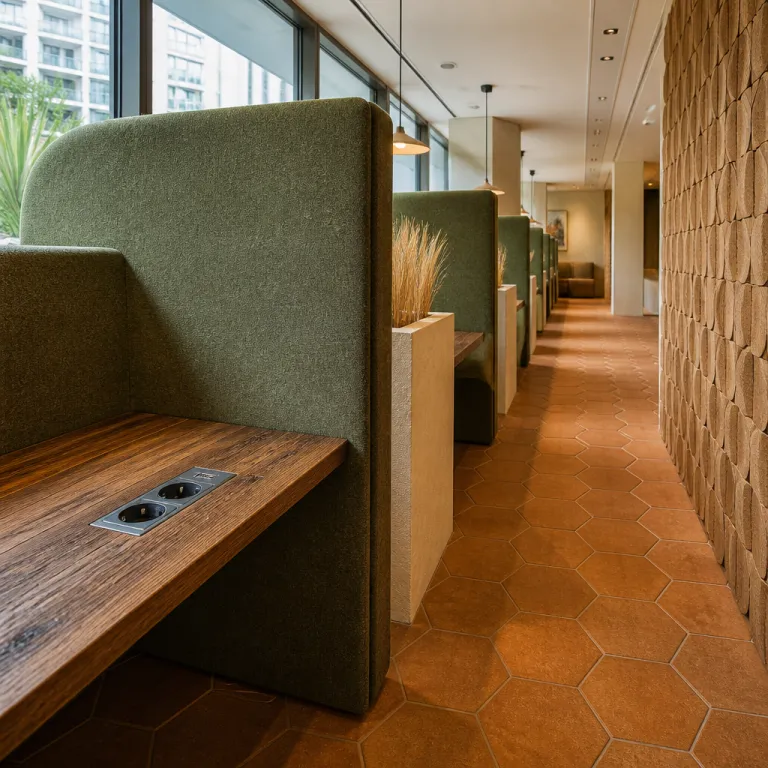
Hotels that invest in acoustic treatments and clear zoning see measurable gains in workspace satisfaction and repeat use. Acoustic panels on ceilings, upholstered partitions between tables and soft finishes on floors absorb sound and reduce reverberation in open plan areas. These acoustic solutions are relatively cost effective compared with full construction, especially when combined with better air quality strategies in coworking media spaces, as outlined in this guide on practical strategies to enhance air quality in hotel lobbies and coworking media spaces and complementary lobby power outlet layout guide resources. A midscale European property that added ceiling baffles, rugs and basic zoning reported a 25% increase in day-pass sales and a double-digit rise in average dwell time within six months, based on pre and post renovation sales reports and manual head counts.
Sound masking is the second lever, and it is often misunderstood by non specialists. A sound masking system introduces a controlled layer of background sound, usually tuned white noise or sometimes pink noise, that makes individual speech less intelligible and therefore less distracting. Properly calibrated masking systems do not make the office spaces louder; they smooth out peaks of office noise so that guests can read, work and hold low key conversations without feeling exposed, creating a more consistent acoustic backdrop across the coworking floor.
Privacy: from open plan theatre to speech-secure micro zones
Open spaces are visually impressive, but open plan theatrics rarely align with real speech privacy needs. Guests trying to negotiate contracts, handle HR issues or read sensitive documents cannot do this in a fully open office style lobby without feeling watched. The result is short, stressed work sessions and a clear decision not to use that hotel as a regular office space alternative.
Phone booths and quiet pods are now the reference product for private calls in hotel coworking areas. A single enclosed pod with integrated sound masking system, ventilation and power typically costs between USD 3,000 and 8,000 according to supplier price lists and recent procurement tenders, but it unlocks high value use cases such as confidential video calls and interviews. For properties that cannot add pods immediately, screened alcoves with high back seating, acoustic panels and targeted white noise or pink noise speakers can create semi private zones that still protect speech privacy in plan offices.
Design intent matters more than labels here. A so called media lounge that does not provide any real speech privacy will underperform compared with a smaller, well shielded system office style room that guests can book by the hour. Resources such as this acoustic lobby quiet zone design guide show how to combine sound masking, acoustic materials and layout to turn noisy open office spaces into layered environments. The goal is a portfolio of spaces where guests can choose between open collaboration, semi private focus work and fully private conversations without leaving the property.
Power: outlets, charging systems and furniture that actually works
Power access is the third complaint, and it is the easiest to fix quickly. Guests expect that every one or two seats in a work zone will have a reachable outlet, not a cable stretched across a corridor or a single overloaded power strip. When this expectation fails, even the best acoustic design and privacy solutions cannot save the workspace experience.
For newer hotels, the answer is to integrate power into the base build systems and furniture from the start. Floor boxes every 2 to 3 metres in coworking areas, table legs with concealed cabling and banquettes with integrated sockets create a seamless office space experience. Wireless charging pads embedded in table surfaces add convenience, but they should complement, not replace, traditional outlets that support full office work with laptops, phones and accessories.
Retrofitting older properties requires a mix of quick wins and phased upgrades. Surface mounted power tracks along walls, furniture with built in power modules and high quality power strips can stabilise the offer while you plan deeper electrical upgrades with engineers. When you combine reliable power with acoustic comfort and real privacy, you finally deliver on the promise of hotel workspace design as a coherent system, not a collection of isolated gestures.
From quick wins to capex: a roadmap for hotel workspace repeat rates
Solving noise, privacy and power is not a one time project; it is an operational strategy. The most successful properties treat their coworking and media spaces as commercial office assets with clear KPIs for occupancy, dwell time and repeat use. They track how changes in acoustic design, sound masking systems and power availability correlate with workspace day pass renewals and ancillary spend at the bar.
Quick wins focus on low disruption interventions that immediately reduce office noise and improve comfort. Wall mounted acoustic panels, fabric wrapped columns, rugs in high reflection zones and portable sound masking units can all be installed without closing spaces. At the same time, adding more accessible outlets, upgrading a few key tables to system office style furniture with integrated power and clarifying quiet zone policies can shift guest perception within weeks.
Capital projects then build on this momentum. Re zoning open office spaces into distinct quiet, collaboration and social areas, adding enclosed pods and upgrading to networked masking systems from established providers such as Cambridge Sound Management turn ad hoc fixes into a coherent system. For a structured approach to planning, zoning and launch, many operators now use checklists such as this operator checklist for setting up a coworking space in a hotel, which aligns design, systems and operations around measurable outcomes.
FAQ
How can hotels reduce noise complaints in coworking and lobby workspaces ?
Combine acoustic materials, zoning and clear behaviour rules. Use ceiling and wall panels, soft flooring and upholstered furniture to absorb sound, and separate quiet zones from social areas. Track dB levels with simple sound meter apps before and after interventions as a KPI to prove impact and refine the hotel coworking sound masking case study for internal reporting.
What amenities matter most for hotel guests who use workspaces regularly ?
Regular workspace users prioritise reliable Wi Fi, ergonomic seating, accessible power and a range of spaces with different levels of privacy. Provide open spaces for informal meetings, semi private corners for focused work and enclosed rooms or pods for confidential calls. Amenities such as sound masking, good lighting and quality coffee then differentiate one property from another and support higher repeat use.
Why is privacy so critical in hotel coworking and media spaces ?
Privacy is critical because many guests handle sensitive information, HR topics or financial discussions while travelling. Without speech privacy, they either shorten their work sessions or move calls back to their room, which undermines the value of shared office spaces. It enhances focus and productivity for guests and also builds trust that the hotel understands professional needs and protects confidential work.
What low cost steps can a General Manager take before a full renovation ?
A General Manager can start with acoustic panels, rugs and high back seating to soften sound in open office areas. Add more power strips, label quiet tables and train the team to guide guests toward the right space for each type of work as part of a simple lobby power outlet layout guide. These steps improve perceived office sound quality and privacy while you plan larger investments in pods, masking systems and electrical upgrades.
How should hotels communicate workspace features to increase repeat use ?
Clearly describe workspace zones, privacy options and power availability on the website, in pre arrival emails and at check in. Front desk and guest services teams can proactively mention quiet rooms, private pods and coworking passes to guests who ask about office space or late checkout. Transparent communication sets expectations, reduces complaints and encourages guests to treat the hotel as a reliable place to work, not just to sleep, which in turn supports higher occupancy and workspace renewal rates.